

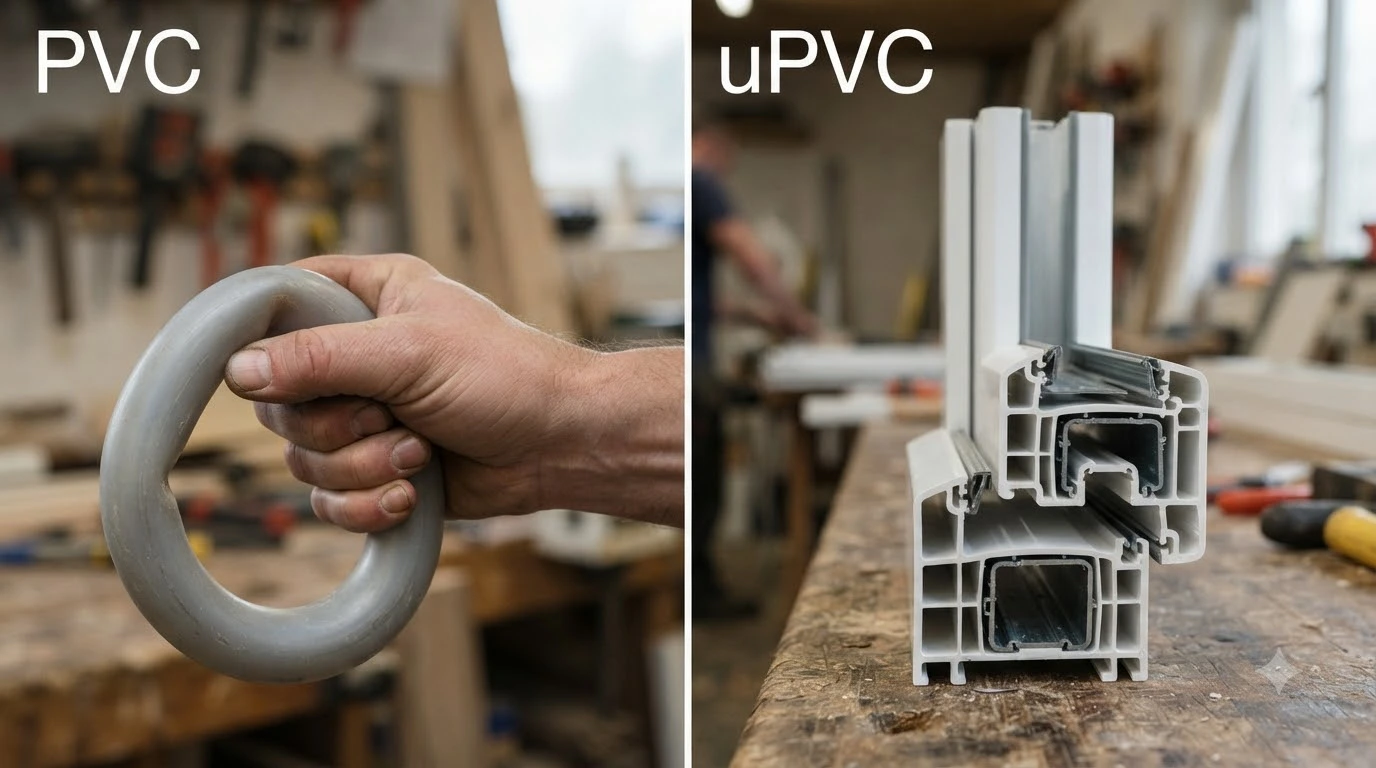
PVC (polyvinyl chloride) and uPVC ( unplasticized polyvinyl chloride) are two plastic materials widely used in a variety of applications. Although they share a similar chemical basis, their properties and uses are quite different. In this article, we’ll explore the characteristics of each, their advantages and disadvantages, as well as their most common applications. Understanding these differences can help you make informed decisions when selecting the right material for a specific project.
Chemical differences between PVC and uPVC
The main difference between PVC and uPVC lies in their chemical composition. PVC is a material that contains plasticizers, making it flexible and suitable for various applications. On the other hand, uPVC is a type of PVC that does not contain plasticizers, giving it greater rigidity and durability. This difference in chemical composition is crucial, as it affects not only the material’s flexibility but also its resistance to external factors such as moisture, corrosion, and UV exposure.
PVC, because it contains plasticizers, is more susceptible to degradation over time, especially when exposed to harsh weather conditions. This means that PVC can become brittle and lose its structural integrity over time. In contrast, uPVC is more resistant to weathering and degradation, making it a preferred choice for outdoor applications such as windows and doors.
Physical properties of PVC and uPVC
The physical properties of PVC and uPVC are fundamental in determining their use in different industries. PVC is known for being a lightweight and flexible material, making it ideal for applications requiring a degree of malleability. For example, it is commonly used in the manufacture of pipes, cladding, and consumer products such as toys and furniture. However, this flexibility also means that PVC can be less resistant under high-stress conditions.
In contrast, uPVC is a more rigid and stronger material. This makes it suitable for applications requiring greater structural strength. For example, uPVC is often used in the construction of window and door frames, where durability and resistance to warping are essential. Furthermore, uPVC does not warp or crack over time, making it a more reliable choice for long-term applications.
Advantages of PVC
PVC has several advantages that make it popular in various applications. First, its flexibility allows it to be shaped into a variety of forms and sizes, making it ideal for custom products. It is also an economical material, making it an attractive option for manufacturers looking to keep production costs down. Furthermore, PVC is easy to work with and can be molded into a variety of shapes, making it versatile in the design and manufacturing industry.
Another advantage of PVC is its corrosion resistance. This makes it ideal for applications in humid environments or where there is exposure to chemicals. For example, it is commonly used in pipes for plumbing and drainage systems because it does not corrode easily and has a long lifespan. However, it is important to note that, despite these advantages, PVC may not be the best choice for all applications due to its susceptibility to degradation over time.
Advantages of uPVC
uPVC, for its part, offers several advantages that make it ideal for construction and interior design applications. One of the main advantages is its weather resistance. uPVC does not deteriorate easily when exposed to sunlight, rain, or humidity, making it a preferred choice for windows and doors. Furthermore, its corrosion resistance means it does not rust or wear down over time, contributing to its longevity.
Another advantage of uPVC is its low maintenance. Unlike other materials, such as wood, which require regular upkeep, uPVC only needs occasional cleaning with soap and water. This not only saves time and effort but also reduces costs in the long run. Furthermore, uPVC is a recyclable material, making it a more sustainable option compared to other plastics that are not recyclable.
Disadvantages of PVC
Despite its many advantages, PVC also has disadvantages. One of the main concerns is its environmental impact. The production and disposal of PVC can be harmful to the environment, as it releases toxic substances during its manufacture and decomposition. Furthermore, PVC is not biodegradable, meaning it can contribute to the accumulation of plastic waste in landfills and oceans.
Another disadvantage of PVC is its lower durability compared to uPVC. Although PVC is corrosion-resistant, its flexibility can make it more susceptible to impact or stress damage. This means that in applications requiring high structural strength, PVC may not be the best choice. Furthermore, its susceptibility to UV degradation can limit its use in outdoor applications.
Disadvantages of uPVC
While uPVC has many advantages, it also has some disadvantages. One of the main ones is its cost, which can be higher compared to PVC. This can be an important factor to consider for projects with a tight budget. However, it’s important to keep in mind that although the initial cost may be higher, the durability and low maintenance of uPVC can offset this difference in the long run.
Furthermore, uPVC is less flexible than PVC, which can limit its use in applications requiring a degree of malleability. This means that, in some cases, uPVC may not be suitable for products that need to be molded into specific shapes. However, for applications requiring rigidity and strength, uPVC is generally the best choice.
Common applications of PVC
PVC is used in a wide variety of applications due to its versatility and cost-effectiveness. Some of the most common applications include:
- Pipes : They are used in plumbing systems, drains and irrigation systems.
- Coatings : These are used to protect surfaces in industrial and commercial environments.
- Construction material : Used in panels, roofs and floors.
- Consumer products : Includes toys, furniture, and fashion products.
Furthermore, PVC is also used in the electrical industry to manufacture cables and electrical components, as it is an excellent insulator. Its ability to be molded into different shapes and sizes makes it a popular material for manufacturing custom products, which in turn makes it valuable in industrial design.
Common applications of uPVC
uPVC is primarily used in construction and architecture due to its durability and strength properties. Some of the most common applications of uPVC include:
- Windows : They are used in the manufacture of window frames that are weather-resistant.
- Doors : Used in front and patio doors, providing security and insulation.
- Exterior cladding : Used to protect buildings from moisture and wear.
- Drainage pipes : These are used in drainage systems due to their resistance to corrosion.
uPVC is especially valued in applications where energy efficiency is important. For example, uPVC windows are often manufactured with double glazing, which helps improve the thermal insulation of buildings. This not only reduces energy costs but also contributes to a more comfortable indoor environment.
Environmental considerations
Environmental concerns have led to increased scrutiny of plastic materials, including PVC and uPVC. Both materials have an environmental impact, albeit in different ways. PVC, being a material that contains plasticizers, can release toxic substances during its production and disposal. This has led many companies to seek more sustainable alternatives and reduce their use of PVC in their products.
On the other hand, uPVC, because it contains no plasticizers, is considered a more environmentally friendly option. Furthermore, its long lifespan and low maintenance mean that less energy and resources are required for repair or replacement. However, it is important to remember that uPVC also has an environmental impact, especially during its production and disposal. The industry is working to develop more sustainable methods for manufacturing and recycling these materials.
Conclusions on PVC and uPVC
When comparing PVC and uPVC, it’s clear that both materials have their own advantages and disadvantages. The choice between them will largely depend on the specific application and project requirements. If flexibility and cost are paramount, PVC may be the better option. However, if durability and weather resistance are required, uPVC is generally preferred.
Ultimately, understanding the differences between PVC and uPVC can help you make more informed decisions about which material to use in a specific project. By considering factors such as cost, durability, and environmental impact, you can choose the material that best suits your project’s needs and objectives.
