

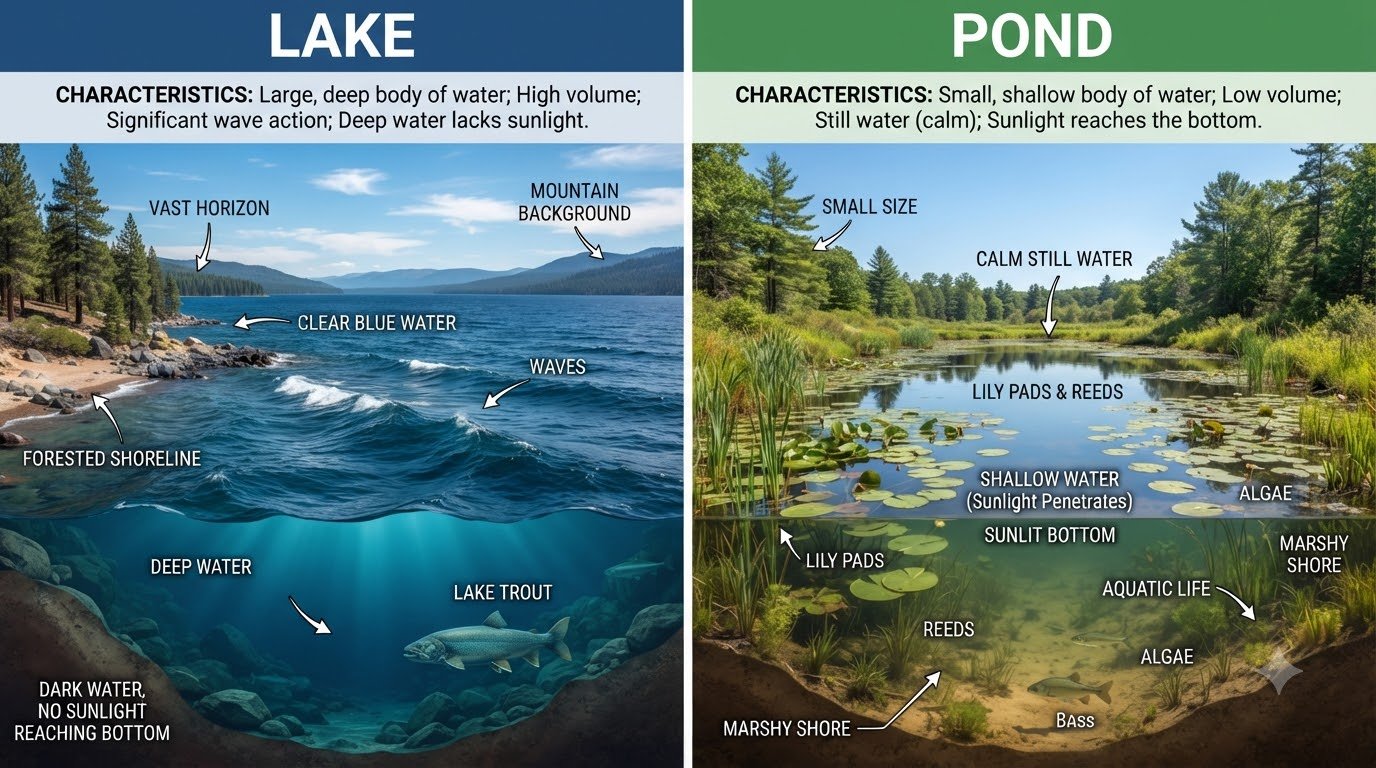
The difference between a lake and a pond may seem simple, but it’s important to understand the characteristics that define each of these bodies of water. Although both are accumulations of water, there are aspects that clearly distinguish them. People often use these terms interchangeably, but each has its own definition and unique characteristics. In this article, we’ll explore the key differences between lakes and ponds, as well as their formation, ecosystems, and their importance in nature.
Definition of lake
A lake is a body of fresh or salt water surrounded by land. Its size is generally larger than that of a pond and can range from a few square kilometers to hundreds of square kilometers. Lakes are typically quite deep, allowing them to support a variety of ecosystems and species. Furthermore, lakes can be fed by rivers, streams, or rainfall. The depth and size of a lake also influence its temperature, salinity, and the diversity of life it can support.
Lakes can be of natural or artificial origin. Natural lakes are formed through geological processes such as erosion, land subsidence, or glacial melt. On the other hand, artificial lakes are created by humans, often through the construction of dams or reservoirs. The creation of artificial lakes can serve multiple purposes, such as water storage, hydroelectric power generation, or recreation.
Definition of pond
A pond is a body of water smaller and shallower than a lake. Generally, ponds have a surface area of less than 2 hectares and a limited depth, allowing sunlight to reach the bottom. This characteristic makes ponds ideal for the growth of aquatic plants and algae. Often, ponds are naturally occurring, but they can also be man made for various purposes, such as aquaculture or recreation.
Ponds tend to be more stable in terms of temperature and salinity, allowing them to maintain a balanced ecosystem. However, their limited size also means they can be more susceptible to changes in water quality and environmental conditions. Unlike lakes, ponds don’t usually support large fish populations, although they can be home to a variety of insects, amphibians, and plants.
Physical characteristics
Physical characteristics are one of the main differences between lakes and ponds. In terms of depth, lakes are typically much deeper than ponds. A lake can reach depths of over 100 meters, while a pond rarely exceeds 2 meters. This difference in depth affects the water temperature, the amount of sunlight that penetrates, and consequently, the aquatic life that can exist in each type of body of water.
In terms of size, lakes are significantly larger. A lake can cover an area of hundreds of square kilometers, while a pond is generally limited to a few hectares. This difference in size also influences how each body of water interacts with its environment. For example, lakes can have currents and waves, while ponds tend to be calmer and more stable.
Water composition
- Salinity: Lakes can be salty or fresh, while ponds are predominantly freshwater.
- Nutrients: Ponds usually have a higher concentration of nutrients, which favors the growth of plants and algae.
- Oxygenation: Lakes, due to their depth, can have anoxic zones where oxygen does not reach, while ponds, being more superficial, are usually more oxygenated.
Ecosystems and biodiversity
Biodiversity in lakes and ponds also varies significantly. Lakes, due to their larger size and depth, can support a wide variety of species, including fish, mammals, birds, and aquatic plants. For example, a large lake can be home to species such as trout, salmon, and various waterfowl. The diversity of habitats found in lakes is also greater, allowing for the coexistence of multiple species in different ecological niches.
On the other hand, ponds tend to have more limited biodiversity. Although they can support a variety of life, such as frogs, salamanders, and some fish species, their smaller size and depth restrict the amount of available habitat. However, ponds are crucial for many species, especially amphibians that depend on these bodies of water to reproduce. Aquatic vegetation in ponds also plays an important role in habitat creation and water filtration.
Formation and origin
The formation of lakes and ponds can occur through various natural processes. Lakes are often formed by geological processes such as glacial erosion, land subsidence, or tectonic activity. These processes can take thousands of years and result in large, deep bodies of water. For example, glacial lakes form when a glacier carves out a hollow in the ground and then melts, filling the space with water.
In contrast, ponds are usually formed more simply. They are often created by the accumulation of rainwater or by river overflows. Ponds can also result from human activities, such as the construction of small reservoirs for agriculture or aquaculture. This artificial creation allows ponds to be used for specific purposes, such as fish farming or species conservation.
Ecological importance
Both lakes and ponds play a vital role in the ecosystem. Lakes, due to their size and depth, are important sources of freshwater and are crucial for maintaining biodiversity. They provide habitats for a variety of species and are essential for regulating the climate and the water cycle. Furthermore, lakes can act as carbon sinks, helping to mitigate climate change.
Ponds, though smaller, are also vital to the ecosystem. They serve as a refuge for endangered species and are essential for the reproduction of many amphibian species. Furthermore, ponds help filter pollutants from the water, improving water quality in their surroundings. They are often gathering places for wildlife, providing food and shelter for birds, insects, and other animals.
Human uses
Humans use both lakes and ponds for a variety of purposes. Lakes, due to their size and resources, are used for recreational activities such as boating, fishing, and tourism. In addition, many lakes are important sources of drinking water for nearby communities. Proper management of these resources is crucial to ensuring they remain clean and sustainable in the long term.
Ponds, for their part, are frequently used in agriculture and aquaculture. They are used to raise fish and other aquatic organisms, providing a food source. In addition, ponds can be used for rainwater harvesting and crop irrigation. However, the management of these ponds is equally important to prevent pollution and ensure that aquatic ecosystems remain healthy.
Conclusion of the comparison
In summary, although lakes and ponds are both bodies of water, they have significant differences in terms of size, depth, biodiversity, and formation. Lakes are larger and deeper, allowing them to support a greater variety of aquatic life. On the other hand, ponds are smaller and shallower, but they are equally important to the ecosystem. Both bodies of water are essential for life on Earth and must be managed sustainably to ensure their conservation for future generations.
