

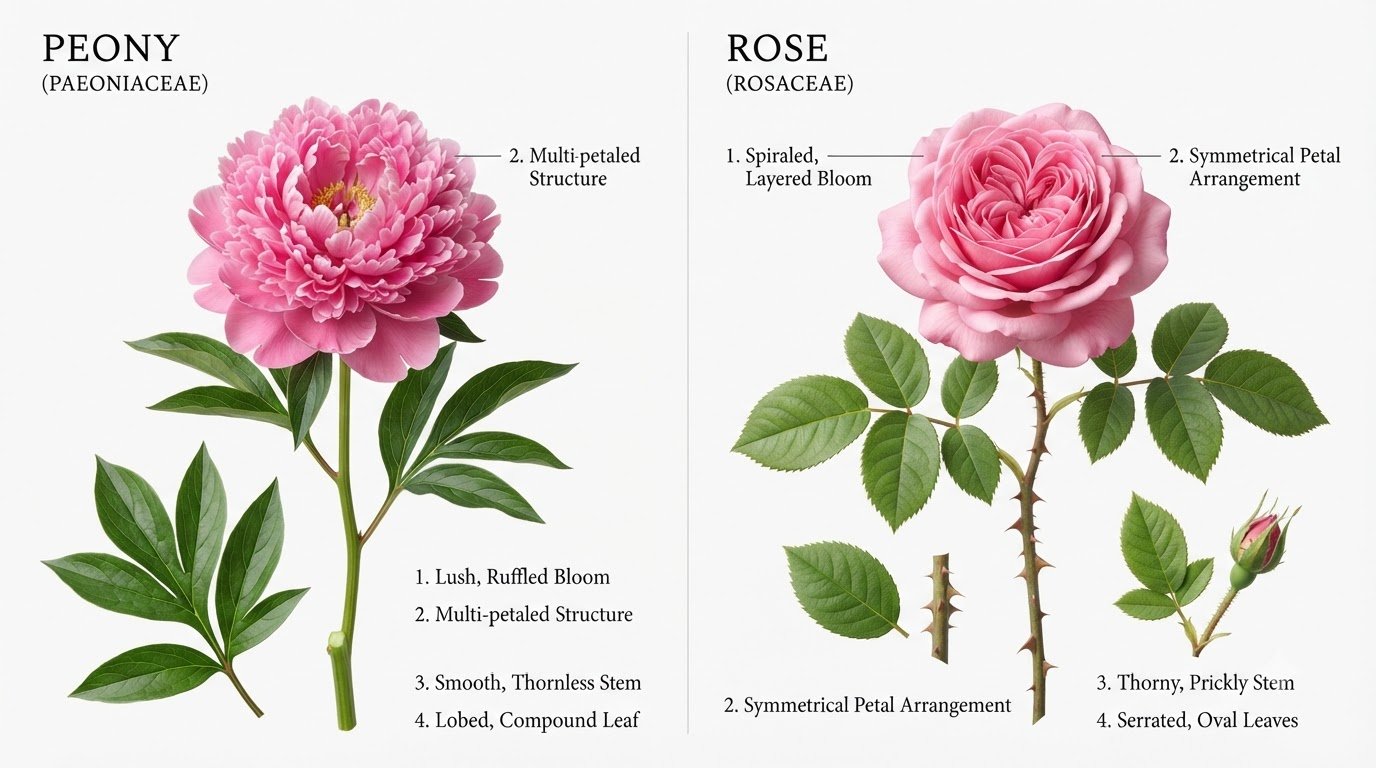
Peonies and roses are two of the most beloved and appreciated flowers in the world of gardening and floral design. They are often confused due to their beauty and popularity, but in reality, they have very distinct characteristics that make them unique. In this article, we will explore in depth the differences between these two flowers, from their origin and care to their meanings and uses . This way, flower lovers can choose the one that best suits their needs and preferences.
Origin and botanical characteristics
Peonies are perennial plants belonging to the Paeoniaceae family. Originating in Asia, Europe, and North America, they have been cultivated for over 2,000 years. These flowers are known for their large, fragrant blooms , which can range in color from white to deep red, including shades of pink and yellow. The peony’s life cycle includes a dormant period during the winter, making it resistant to cold climates.
On the other hand, roses belong to the Rosaceae family and are native to Asia, although they are also found in Europe and North America. Roses are shrubs or climbing plants that produce flowers in a wide range of colors and shapes. Unlike peonies, roses can bloom for much of the year, depending on the variety and weather conditions. The rose is one of the most widely cultivated flowers and has a rich history in culture and symbolism.
Care and maintenance
Caring for peonies requires special attention. These plants prefer well-drained soil rich in organic matter. It’s important to plant them in a location where they receive at least six hours of sunlight per day. A crucial aspect of peony care is avoiding overwatering, as this can lead to root rot. Furthermore, peonies are generally quite resistant to pests and diseases, making them a low-maintenance option.
In contrast, roses require more attention and care. They need well-drained soil, but also benefit from regular watering. Roses are more susceptible to pests and diseases, such as powdery mildew and aphids, meaning gardeners must be vigilant and apply preventative treatments. Furthermore, roses require annual pruning to promote healthy growth and abundant blooms. This process can be tricky, as you need to know the proper technique for each rose variety.
Varieties and colors
Peonies are divided into several categories, such as herbaceous, shrubby, and tree peonies. Each type has its own characteristics and growth patterns. As for colors, peonies offer an impressive variety, including shades of white, pink, red, yellow, and even purple. Their flower shape also varies, from those with simple petals to those with more complex and showy forms.
Roses, for their part, are even more varied in terms of species and cultivars. There are climbing roses, shrub roses, miniature roses, and many more. As for colors, roses also encompass a wide range, including classic colors like red, white, and pink, as well as more unusual shades like blue and black. The diversity in shape and size makes roses very popular for various occasions, from weddings to home floral arrangements.
Meaning and symbolism
Peonies are known to symbolize prosperity , good fortune , and happiness . In Chinese culture, these flowers are especially valued and are often used in decorations during important celebrations. The peony is also considered the national flower of China, and its beauty has been celebrated in poetry and art throughout history. Giving peonies to someone can be a way to wish them success and joy in their life.
Roses have a rich and varied symbolism, which depends on their color. For example, red roses symbolize love and passion, while white roses represent purity and innocence. Yellow roses symbolize friendship and joy, and pink roses are often associated with gratitude and admiration. Because of their profound meaning, roses are a popular choice for special occasions such as weddings, anniversaries, and celebrations.
Uses in decoration and gardening
In the world of gardening, peonies are prized for their stunning appearance and sweet fragrance. They are ideal for perennial flower gardens, as they bloom in spring and early summer, adding a touch of color and elegance. They can be planted in groups to create a striking visual effect or combined with other flowers for a more varied garden. Furthermore, their long vase life makes them a popular choice for floral arrangements.
Roses, due to their versatility and beauty, are one of the most widely used flowers in decoration. They can be used in bridal bouquets, centerpieces, and floral arrangements for any occasion. Roses are also very popular in landscaping, as they can be grown in different shapes and sizes, adapting to diverse growing conditions. Furthermore, their fragrance is an added attraction that makes them perfect for gardens and patios.
Climate considerations
Peonies are best suited to temperate and cool climates, as they require a period of winter dormancy to bloom properly. In regions with mild winters, peonies may not flower as well. Therefore, it’s important to consider the local climate when planting peonies. Additionally, these plants can be susceptible to disease in damp climates, so ensuring good drainage and ventilation is essential.
Roses, on the other hand, are more adaptable to different climates, although they prefer sunny, well-drained conditions. There are rose varieties that are cold-hardy, as well as others that thrive in warm climates. However, in regions with very hot climates, it is crucial to provide partial shade during the hottest hours of the day to prevent heat stress. Choosing the right variety for the climate is fundamental to successful rose cultivation.
Pests and diseases
Despite being hardy, peonies can be affected by some pests and diseases, such as gray mold and aphids. However, their robust nature makes them less prone to these problems compared to other plants. To keep peonies healthy, it’s advisable to regularly check the leaves and stems for signs of pests. If problems are detected, organic methods or specific treatments can be used to control them.
Roses, on the other hand, are more vulnerable to a variety of pests and diseases. Aphids, spider mites, and powdery mildew are some of the most common problems rose growers face. Prevention is key, and gardeners should be vigilant for symptoms and act quickly. Using organic insecticides and practicing crop rotation can help minimize risks. In addition, maintaining good air circulation around the plants is essential to prevent fungal diseases.
Conclusions on the election
When choosing between peonies and roses, it’s important to consider several factors, such as available space, climate, and the planting purpose. If you’re looking for a long-lasting, easy-care flower, peonies may be the best choice. However, if you want a versatile flower that offers a wide range of colors and meanings, roses are ideal. Both flowers bring beauty and elegance to any garden or floral arrangement, and each has its own unique charm that makes it special.
Ultimately, both peonies and roses hold a special place in the hearts of flower lovers. The choice between them will depend on personal preference and growing conditions. By understanding the differences and similarities between these two iconic blooms, gardeners and flower enthusiasts can make informed decisions that will enrich their gardens and their lives.
