

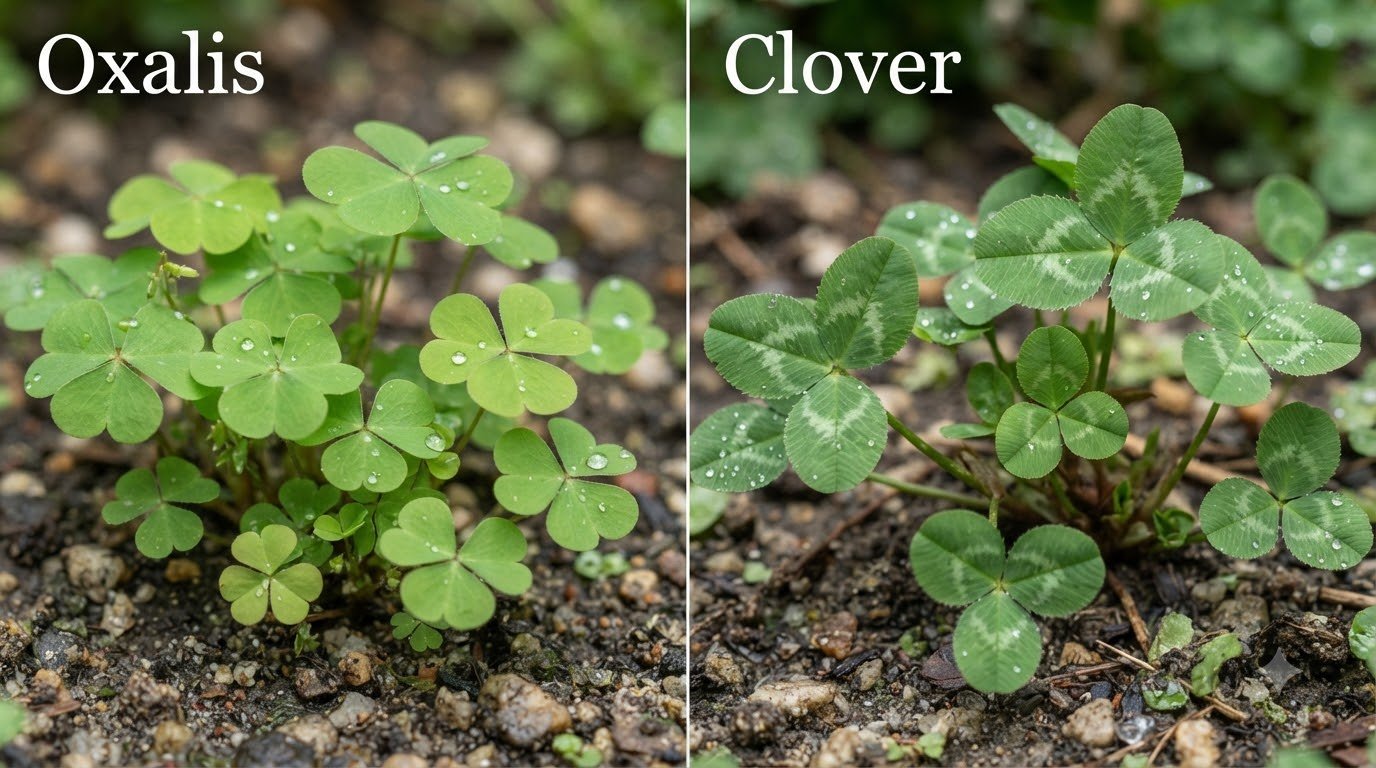
Nature is full of plants that are often confused with one another due to their similar characteristics. Two such plants are Oxalis and Clover. Although both belong to the legume family, they have significant differences in their morphology, habitat, and uses. In this article, we will explore these differences in detail, providing valuable information for those who wish to learn more about these plants. Correctly identifying each is essential, as they not only look different but also play distinct roles in the ecosystem and in people’s daily lives.
Morphological differences between Oxalis and Clover
One of the most obvious differences between Oxalis and Clover is their morphology. The Oxalis plant, commonly known as oxalic acid, has heart-shaped leaves that grow in clusters. These leaves are often a bright green, but some species can have purple or even yellow tones. On the other hand, clover has leaves that are usually more oval or trefoil-shaped, meaning each plant has three leaves arranged in a cluster. Clover leaves can be green or have white spots, making them quite distinctive.
As for the flowers, Oxalis produces small blooms that can be white, yellow, or pink, depending on the species. These flowers typically have five petals and grow in clusters. In contrast, Clover flowers are more spherical and can be white, pink, or red. These flowers are also larger compared to Oxalis blooms and tend to grow in denser clusters. This difference in flower structure is one of the easiest ways to identify each plant in the field.
Habitat and distribution
The habitat of each plant is another aspect that notably differentiates them. Oxalis is commonly found in temperate and tropical climates and adapts to a variety of soil conditions. This plant tends to grow in shady areas, such as under trees or in damp meadows. Its ability to thrive in acidic soils and its resilience to adverse conditions make it a very versatile plant. Furthermore, some Oxalis species are considered invasive in certain regions, which can affect local biodiversity.
On the other hand, clover is mostly found in pastures and open fields. It prefers well-drained soils and usually grows in sunny areas. Clover is known for its ability to fix nitrogen in the soil, making it a beneficial plant for agriculture and gardening. It can be found all over the world, especially in temperate regions. Clover’s wide distribution means it can adapt to different climates and soil types, although it prefers well-drained areas.
Uses of Oxalis and Clover
The uses of Oxalis and Clover are varied and reflect their unique characteristics. In the case of Oxalis, some species are valued for their medicinal properties. For example, it has been used in traditional medicine to treat digestive problems and as a diuretic. However, it is important to note that oxalic acid, present in high concentrations in some species, can be toxic if consumed in large quantities. Therefore, it is essential to know the different varieties before using them for medicinal purposes.
Clover, on the other hand, has a wider range of uses in agriculture. It is a popular forage crop due to its high protein and nutrient content, making it excellent livestock feed. Furthermore, its ability to improve soil quality through nitrogen fixation makes it valuable in crop rotation. It is also used in landscaping as a ground cover to control erosion and improve soil fertility. Its flowering attracts pollinators, which benefits other plants in the ecosystem.
Nutritional properties
The nutritional properties of Oxalis and Clover are important aspects to consider, especially for those looking to incorporate these plants into their diet. Oxalis, although edible in small quantities, contains oxalic acid, which can interfere with the absorption of minerals such as calcium. However, some Oxalis species are rich in vitamin C and antioxidants, which can provide health benefits when consumed in moderation. The leaves and flowers can generally be used in salads or as a garnish, adding a characteristic acidic flavor.
In the case of clover, its nutritional properties are quite impressive. Clover leaves are rich in protein, fiber, and various minerals, including iron and calcium. Furthermore, clover flowers are edible and can be used to make infusions or as a garnish on dishes. Clover has also been used in traditional medicine to treat various ailments, including respiratory and skin problems. Its high nutrient content makes it an excellent addition to a balanced diet.
Impact on the ecosystem
Both Oxalis and Clover have a significant impact on their respective ecosystems. Oxalis, due to its ability to adapt to different conditions, can rapidly colonize disturbed areas. However, its invasive nature in some regions can threaten native species, resulting in a decrease in biodiversity. Competition for resources such as light, water, and nutrients can be intense, negatively affecting other plants that cannot compete with Oxalis’s aggressive growth.
On the other hand, clover has a positive impact on the ecosystem. Its ability to fix nitrogen in the soil helps improve fertility, which benefits the plants that grow around it. Furthermore, clover provides food and habitat for a variety of insects and animals. Its flowering attracts pollinators such as bees and butterflies, which are crucial for the reproduction of many plants. In this way, clover contributes to the overall health of the ecosystem, promoting diversity and sustainability.
Care and maintenance
The care and maintenance of Oxalis and Clover varies depending on the type of plant and the environment in which they are grown. Oxalis, being a perennial, may require less attention once established. It prefers well-drained soil and partial shade, and it is important to avoid overwatering, as this can lead to root rot. In terms of maintenance, removing faded flowers and controlling its spread are essential tasks to prevent it from becoming invasive.
Clover, on the other hand, is quite easy to care for. It adapts well to different soil types and weather conditions, although it prefers sunny areas. Watering is necessary during periods of drought, but in general, clover is drought-resistant once established. It is advisable to cut back clover after flowering to encourage healthy growth and prevent excessive spreading. Furthermore, as a ground cover, it can help suppress weed growth, reducing the need for herbicides.
Common varieties
There are several varieties of Oxalis and Clover that are popular in gardens and landscapes. For Oxalis, some of the most common species include Oxalis triangularis, known for its purple leaves and white flowers, and Oxalis deppei , which is popular for its ornamental appearance. These varieties are appreciated not only for their beauty but also for their hardiness and ease of care, making them an ideal choice for novice gardeners.
Regarding clover, the best-known varieties are white clover (Trifolium repens) and red clover (Trifolium pratense). White clover is widely used as a forage crop due to its high protein content and its ability to grow in poor soils. Red clover, on the other hand, is valued for its ability to improve soil quality and its use in hay production. Both varieties are excellent for attracting pollinators and enhancing biodiversity in the garden.
Conclusions about Oxalis and Clover
Comparing Oxalis and Clover reveals that, while they share some similarities, they are distinct plants with unique characteristics. From their morphology and habitat to their uses and nutritional properties, each has its place in the natural world. Understanding these differences is essential for those who wish to use these plants in gardening, agriculture, or for medicinal purposes. Furthermore, their impact on the ecosystem and their proper care are important aspects to consider for maintaining a healthy and balanced environment. Whether Oxalis is chosen for its beauty or Clover for its agricultural benefits, both plants contribute significantly to the diversity and sustainability of the natural environment.
