

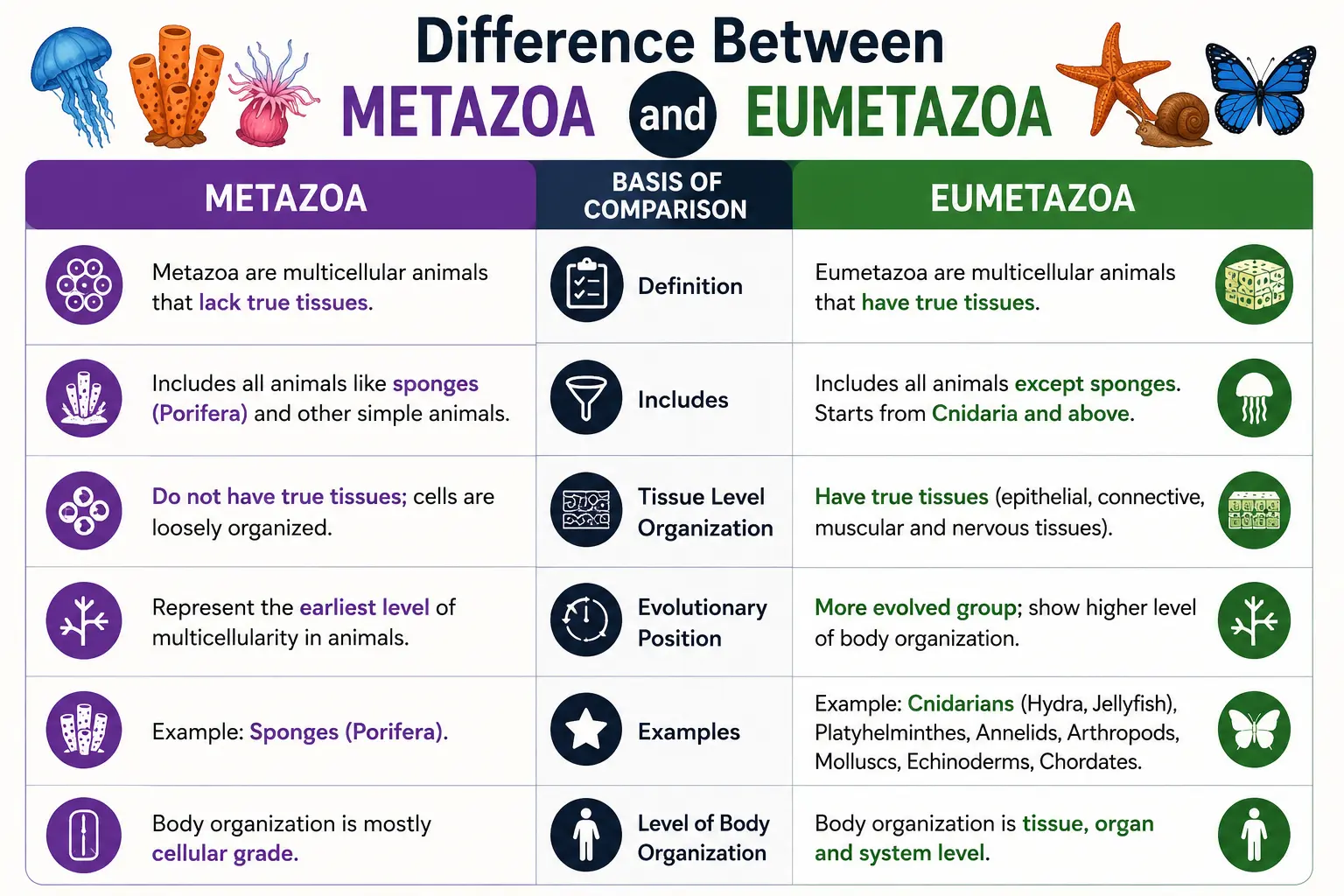
Metazoan are a broad group of multicellular organisms characterized by their structural and functional complexity. These organisms include a wide variety of life forms, from sponges to mammals. Within this group, we find eumetazoa , which are more advanced metazoan with specific characteristics that distinguish them from other metazoan. In this article, we will explore in depth the differences between metazoan and eumetazoa, as well as the implications of these differences for the study of biology and evolution.
Definition of Metazoan
Metazoan are multicellular organisms that develop from an embryo. This group includes all animals and is characterized by having specialized cells that form tissues and organs. Metazoan are heterotrophic organisms, meaning they obtain their food from other organisms. This group is divided into several subgroups, including sponges, cnidarians, and flatworms, among others. The diversity of shapes and sizes in metazoan is astonishing, ranging from microscopic organisms to enormous mammals like whales.
One of the most remarkable characteristics of metazoan is their ability to move at some point in their lives. This is because most of them possess muscular and nervous systems that allow them to respond to environmental stimuli. Furthermore, metazoan have a life cycle that typically includes larval developmental stages, during which cells specialize and organize into more complex structures. This cellular specialization is fundamental to the functioning of multicellular organisms.
Characteristics of Eumetazoa
Eumetazoa are a subgroup of metazoan characterized by having true tissues. This means their cells are organized into germ layers that give rise to different types of tissues and organs. Eumetazoa are divided into two main groups: radiates, which include cnidarians such as jellyfish and corals, and bilaterians, which encompass most animals, including vertebrates and arthropods. This tissue organization allows eumetazoa to perform more complex functions compared to other metazoan.
One of the key characteristics of eumetazoa is the presence of symmetry in their bodies. Bilateral eumetazoa, for example, exhibit bilateral symmetry, meaning their bodies can be divided into two nearly identical halves along a plane. This symmetry is important for locomotion and the organization of internal systems. Furthermore, eumetazoa also have a more developed nervous system, allowing them to respond more effectively to their environment and perform more complex behaviors.
Differences between Metazoan and Eumetazoa
One of the most notable differences between metazoan and eumetazoa is their cellular organization. While all metazoan are multicellular, not all exhibit tissue organization. For example, sponges are metazoan, but they are not eumetazoa because they lack true tissues. In contrast, eumetazoa have a more complex structure that allows them to perform biological functions more efficiently. This difference in cellular organization is fundamental to understanding the evolution of multicellular organisms.
Another important difference is the presence of symmetry. Eumetazoa, in general, exhibit some type of symmetry, either radial or bilateral, which gives them advantages in terms of locomotion and functionality. In contrast, some metazoan, such as sponges, lack symmetry, which limits their ability to move and respond to stimuli. This difference in symmetry also has implications for how organisms interact with their environment and adapt to different ecological niches.
Classification of Metazoan
The classification of metazoan is based on various characteristics, such as cellular organization, symmetry, and the complexity of their nervous system. Metazoan are divided into several groups, including:
- Sponges: Simple organisms that lack true tissues and have an asymmetrical body structure.
- Cnidarians: They include jellyfish, anemones, and corals; they exhibit radial symmetry and basic tissues.
- Platyhelminthes: Flatworms that are more complex than sponges and cnidarians, but still lack a highly developed nervous system.
- Arthropods: Organisms with an exoskeleton and bilateral symmetry, such as insects, arachnids, and crustaceans.
- Vertebrates: A group of eumetazoa that include fish, birds, reptiles, mammals, and amphibians, with a highly developed nervous system.
This classification not only helps us understand the diversity of metazoan, but also provides information about their evolution and adaptation to different environments. As scientists discover new species and study their biology, the classification can be updated and refined, contributing to our overall understanding of life on Earth.
Importance of Eumetazoa in the Ecosystem
Eumetazoa play a crucial role in ecosystems due to their diversity and functionality. As more complex organisms, they can interact more efficiently with their environment. For example, eumetazoa can be herbivores, carnivores, or decomposers, and each of these roles is essential for maintaining balance in ecosystems. Herbivores help control plant populations, while carnivores regulate the populations of other animals.
Furthermore, eumetazoa are also important to humans. Many of them are food sources, such as fish and shellfish, and their conservation is vital for food security. Eumetazoa, as pollinators, also play a crucial role in plant reproduction, which in turn affects food production and environmental health. The disappearance of one eumetazoa species can have a domino effect on the ecosystem, impacting many other species.
Study and Conservation of Metazoan and Eumetazoa
The study of metazoan and eumetazoa is essential for understanding biodiversity and the evolution of life on Earth. Biologists use a variety of techniques, including direct observation, genetics, and molecular biology, to investigate the characteristics and behavior of these organisms. Research in this field not only increases our knowledge of metazoan biology but also provides valuable insights into ecosystem health and the effects of climate change.
The conservation of metazoan and eumetazoa is a current priority. Many species face threats due to habitat loss, pollution, and climate change. Conservation initiatives seek to protect not only endangered species but also the ecosystems in which they live. This includes the creation of nature reserves, the implementation of protective laws, and public education about the importance of biodiversity. Protecting metazoan and eumetazoa is essential to ensuring the health of the planet and the well-being of future generations.
Future Research on Metazoan and Eumetazoa
Future research on metazoan and eumetazoa will focus on several key areas. One approach will be exploring biodiversity in understudied ecosystems, such as the deep ocean or tropical rainforests. As new species are discovered, more details about the evolution and adaptation of these organisms can be revealed. Molecular biology and genetics are also expected to play an important role in understanding the evolutionary relationships among different groups of metazoan.
Another area of study will be the response of metazoan and eumetazoa to climate change. Researchers will seek to understand how variations in temperature, salinity, and other environmental factors affect the survival and reproduction of these organisms. This information will be vital for developing conservation strategies and sustainable management of natural resources. Furthermore, studying the interaction between metazoan and their environment will help predict how ecosystems might change in the future.
Conclusions on Metazoa and Eumetazoa
The difference between metazoan and eumetazoa is a fascinating topic that illustrates the diversity and complexity of life on our planet. By understanding these differences, we can better appreciate the importance of metazoan in ecosystems and the need for their conservation. Research in this field continues to evolve, and each new discovery brings us one step closer to understanding the rich tapestry of life that surrounds us.
