

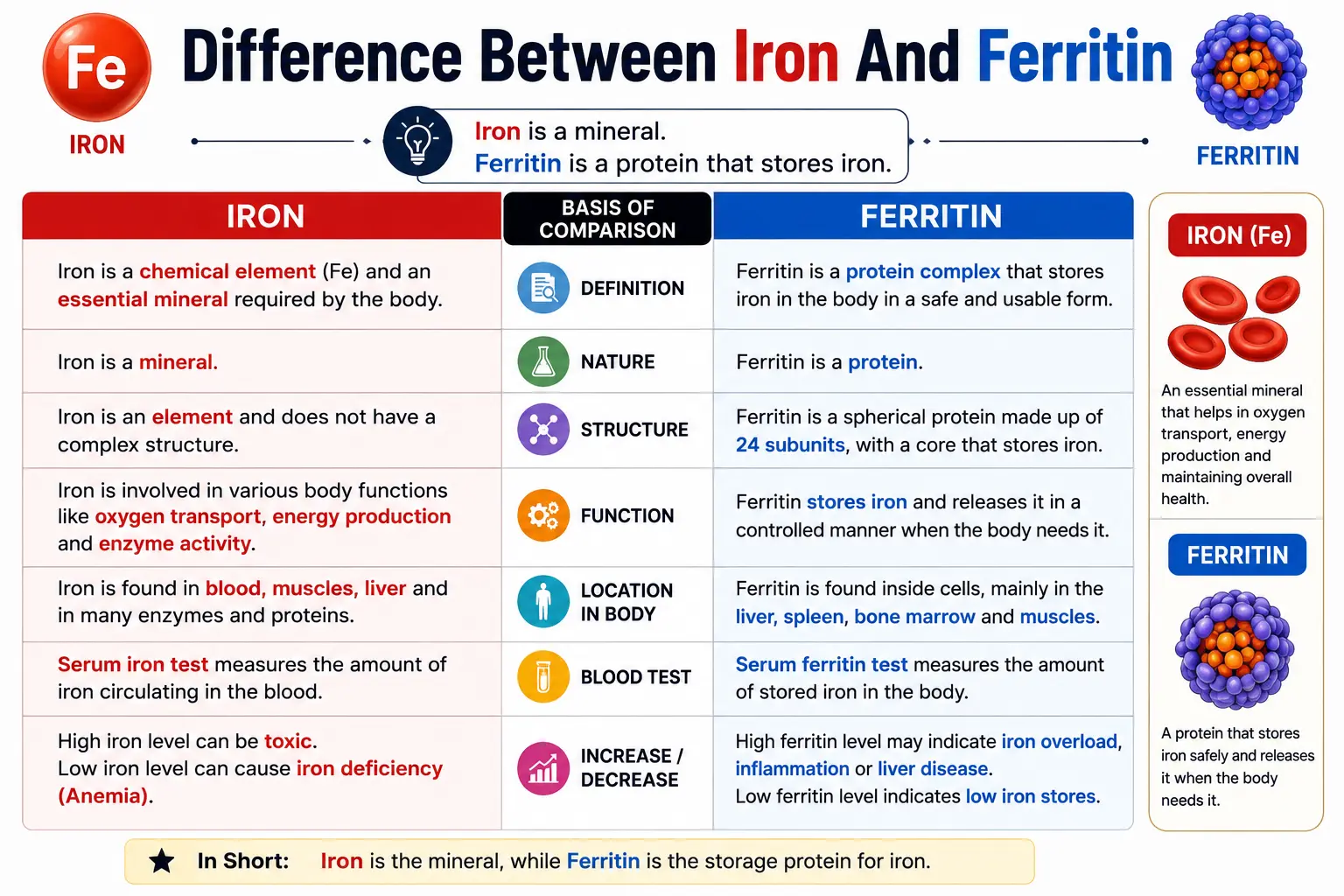
Iron and ferritin are two concepts that are often confused, but they are very different in terms of their function and role in the human body. Iron is an essential mineral that our body needs for various functions, while ferritin is a protein that stores iron. Below, we will explore these differences in detail, as well as the importance of both for our health.
What is iron?
Iron is a naturally occurring mineral that is vital for life. This mineral is an essential component of hemoglobin, the protein in red blood cells that carries oxygen throughout the body. Without enough iron, the body cannot produce enough healthy red blood cells, which can lead to anemia. There are two main types of iron found in food: heme iron and non-heme iron.
Heme iron is found in animal-based foods, such as meat, fish, and poultry. This type of iron is more easily absorbed by the body. On the other hand, non-heme iron is found in plant-based foods, such as legumes, grains, and leafy green vegetables. This type of iron is not absorbed as efficiently as heme iron, which means that people who follow a vegetarian or vegan diet should pay special attention to their iron intake.
What is ferritin?
Ferritin is a protein found in the human body whose main function is to store iron. It acts as an iron reservoir, releasing it when the body needs it. Ferritin is found in almost every cell in the body, but it is especially abundant in the liver, spleen, and bone marrow. The amount of ferritin in the blood can be an indicator of the body’s iron levels.
When a person has adequate iron levels, ferritin can safely store this mineral, preventing it from accumulating to toxic levels. However, if iron levels are too low, ferritin will release iron to help maintain red blood cell production. Conversely, if iron levels are too high, ferritin will become saturated and unable to store more iron, which can lead to health problems.
Key differences between iron and ferritin
One of the main differences between iron and ferritin is their function in the body. While iron is an essential mineral involved in hemoglobin formation and oxygen transport, ferritin is a protein that stores iron. This means that, although related, they have very different roles in maintaining our health.
- Iron: An essential mineral, involved in oxygen transport.
- Ferritin: Storage protein, regulates iron levels in the body.
Another important difference is how each is measured and assessed in the body. Iron levels can be measured through blood tests that determine the amount of circulating iron. Ferritin levels, on the other hand, are assessed through a test that measures the concentration of ferritin in the blood, which can provide a clearer picture of the body’s iron stores.
The importance of iron in health
Iron is essential for many bodily functions. Its most well-known role is in the production of hemoglobin, but it is also crucial for the production of myoglobin, a protein that helps store oxygen in muscles. Furthermore, iron is necessary for the production of certain hormones and the proper functioning of many enzymes. Without sufficient iron, the body cannot function optimally, which can result in fatigue, weakness, and a range of other health problems.
Iron deficiency is a common health problem worldwide, especially among women of childbearing age, children, and people with inadequate diets. Symptoms of iron deficiency can include paleness, weakness, dizziness, and shortness of breath. In severe cases, it can lead to iron-deficiency anemia, which requires medical treatment. Therefore, it is crucial to ensure you get enough iron through your diet or, if necessary, through supplements.
The role of ferritin in the body
Ferritin plays a crucial role in regulating iron levels in the body. It stores iron and releases it when the body needs it, ensuring that there is always enough iron available for red blood cell production and other vital functions. This is especially important during times of increased iron demand, such as during growth, pregnancy, or after blood loss.
Ferritin levels can vary depending on a person’s age, sex, and overall health. For example, women typically have lower ferritin levels than men due to blood loss during menstruation. A ferritin test can help doctors diagnose iron-related problems, such as iron deficiency or iron overload.
Relationship between iron and ferritin
The relationship between iron and ferritin is fundamental to understanding how iron is regulated in the body. When the body has enough iron, ferritin stores it and acts as a safe reservoir. However, when there is an iron deficiency, ferritin releases iron to help maintain adequate levels in the blood. This means that ferritin levels can be a good indicator of iron levels in the body.
On the other hand, if there is an excess of iron in the body, ferritin can become saturated and unable to store more iron. This can be problematic, as excess iron can be toxic and cause organ damage. Therefore, maintaining a proper balance between iron and ferritin is essential for overall health.
How to get enough iron and ferritin?
Getting enough iron through your diet is essential for maintaining adequate ferritin levels. A balanced diet that includes iron-rich foods is key. Some iron-rich foods include red meat, poultry, fish, legumes, spinach, and fortified cereals. It’s important to combine these foods with sources of vitamin C, such as citrus fruits and bell peppers, which can improve iron absorption.
For those who may have difficulty getting enough iron through their diet, such as vegetarians or people with certain health conditions, iron supplements may be an option. However, it is crucial to consult a doctor before starting any supplement, as too much iron can also be harmful.
Consequences of iron deficiency and excess
Iron deficiency can have serious health consequences. Iron deficiency anemia is one of the most common conditions associated with a lack of iron, which can cause fatigue, weakness, and a compromised immune system. Furthermore, iron deficiency can affect cognitive development in children and adolescents, as well as physical performance in adults.
On the other hand, excess iron in the body, known as hemochromatosis, can be equally dangerous. This condition can lead to iron buildup in the organs, causing damage to the liver, heart, and pancreas. It is important to monitor both iron and ferritin levels to prevent these health problems. A doctor can help determine if iron or ferritin testing is needed.
Iron and ferritin tests and examinations
To assess iron and ferritin levels in the body, doctors typically perform a series of tests. One common blood test is the iron profile, which measures the amount of iron in the blood, iron-binding capacity, and ferritin. These results can help doctors determine if a person has iron deficiency, iron overload, or normal levels.
In addition to these tests, doctors may also order a complete blood count (CBC) to assess overall blood health. This test can provide information about red blood cell count and hemoglobin levels, which can indicate iron-related problems. If abnormalities are found, further testing or specific treatments may be recommended.
Food sources of iron and ferritin
To maintain adequate iron and ferritin levels, it is essential to include a variety of iron-rich foods in your diet. Some examples of heme iron sources include:
- Red meat: Beef, lamb and pork.
- Fish: Tuna, salmon and sardines.
- Birds: Chicken and turkey.
For those who prefer non-heme iron sources, there are many plant-based options, such as:
- Legumes: Lentils, chickpeas and beans.
- Leafy green vegetables: Spinach, chard and kale.
- Whole grains: Oats, quinoa and brown rice.
Including a variety of these foods in your diet can help ensure you get enough iron to maintain adequate ferritin levels and, therefore, good overall health.
Recommendations to improve iron absorption
Iron absorption can be affected by several factors, including the foods you eat. To improve iron absorption, it’s advisable to follow some simple strategies. For example, consuming foods rich in vitamin C, such as oranges, strawberries, and bell peppers, along with iron-rich foods can help increase absorption. This is because vitamin C converts non-heme iron into a more easily absorbed form.
Furthermore, it’s important to be aware of iron absorption inhibitors. Some substances, such as calcium, tea, and coffee, can interfere with iron absorption. Therefore, it’s suggested to avoid consuming these products in the same meal as iron-rich foods. Cooking in iron cookware is also beneficial, as this can increase the amount of iron transferred to the food.
Final considerations on iron and ferritin
Both iron and ferritin are essential components for human health. Iron is necessary for hemoglobin production and oxygen transport, while ferritin acts as an iron store, regulating its availability. Maintaining a proper balance between the two is crucial to avoid health problems related to iron deficiency or excess.
It’s important to pay attention to your diet and ensure you’re getting enough iron through iron-rich foods. For those who may have difficulty getting enough iron, consulting a doctor about iron and ferritin testing can be an important step toward maintaining good health. With the right approach, it’s possible to ensure that both iron and ferritin levels remain optimal for overall well-being.
