

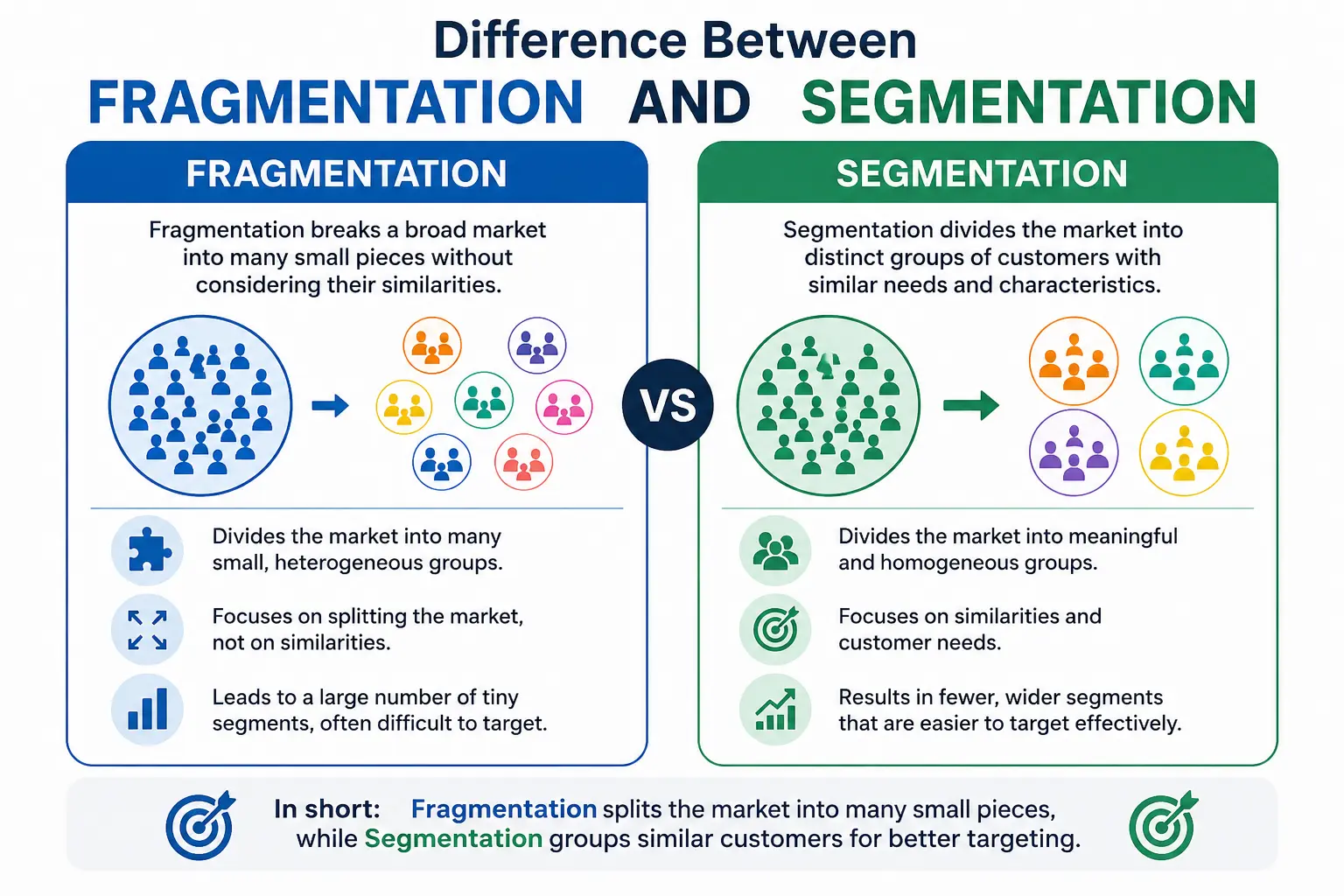
Fragmentation and segmentation are two fundamental concepts in the field of technology, especially in memory management within operating systems. Both terms refer to different ways of dividing memory, but they have distinct characteristics and purposes. Fragmentation occurs when memory is divided into small pieces that are not efficiently usable, while segmentation involves dividing memory into variable-sized segments that correspond to different parts of a program. Understanding these differences is crucial for optimizing memory usage and improving system performance.
What is fragmentation?
Fragmentation refers to the situation where available memory is divided into small portions that cannot be used effectively. There are two main types of fragmentation: internal fragmentation and external fragmentation. Internal fragmentation occurs when a block of memory allocated to a process is larger than it actually needs. For example, if a program requests 10 MB of memory but is allocated 12 MB, the remaining 2 MB are considered internal fragmentation because they cannot be used by other processes.
On the other hand, external fragmentation occurs when there is sufficient total memory available, but it is divided into small blocks that cannot be used. This can happen when several processes run and release memory at different times, leaving small gaps that are not large enough to satisfy the memory requests of new processes. This type of fragmentation can lead to a situation where, despite having free memory, the system cannot effectively allocate it to new processes that require it.
Consequences of fragmentation
The consequences of fragmentation can be quite significant. First, it can lead to degraded system performance. When memory is fragmented, the operating system has to work harder to find contiguous blocks of memory large enough to meet program requests. This can result in increased response times and decreased overall system efficiency.
- Performance: Fragmentation can cause programs to run more slowly.
- Memory usage: Memory is not being used optimally, which may lead to the need for more physical memory.
- Stability: In extreme cases, fragmentation can lead to errors and system crashes.
Furthermore, fragmentation can hinder resource management in memory-intensive systems. For example, in a server environment where multiple applications are running, fragmentation can lead to resource competition, resulting in a reduced capacity to handle workloads. Fragmentation is a phenomenon that can negatively impact both system performance and stability.
What is segmentation?
Segmentation is a memory management method that divides memory space into logical segments of varying sizes. Each segment represents a part of the program, such as functions, arrays, or data structures. Unlike fragmentation, which focuses on how memory is allocated, segmentation focuses on how memory is organized in relation to the program’s needs. This allows segments to be more flexible and adaptable to the specific demands of each process.
In segmentation, each segment has its own base address and associated size. This means that when a program needs to access a segment, it uses its base address and the offset within that segment to access the data. This form of memory management is especially useful for large and complex programs, as it allows for more efficient access to different parts of the code and data.
Advantages of segmentation
One of the main advantages of segmentation is that it allows for better memory organization. By dividing memory into logical segments, programs become easier to manage and modify. This is particularly beneficial in development environments, where code changes are common. Furthermore, segmentation facilitates code sharing between different processes, which can reduce overall memory usage and improve system efficiency.
- Flexibility: Segmentation allows each segment to have a variable size, adapting to the needs of the program.
- Better memory usage: By allowing different segments to share space, the use of total available memory is optimized.
- Ease of maintenance: Segmentation makes updating and maintaining the code easier, since segments can be modified independently.
Another significant advantage of segmentation is that it can improve system security. By dividing memory into segments, more granular access control can be established. This means that restrictions can be implemented to prevent certain processes from accessing memory segments that don’t belong to them, which can help prevent errors and security vulnerabilities.
Key differences between fragmentation and segmentation
Although both concepts are related to memory management, there are key differences that distinguish them. First, fragmentation refers to inefficient memory utilization, while segmentation is a method for organizing memory logically. This difference is fundamental, as fragmentation is a problem that arises from poor memory management, while segmentation is a strategy designed to improve that management.
Another important difference is that fragmentation can occur in systems using both fixed and dynamic memory. Segmentation, on the other hand, is an approach typically used in dynamic memory systems. This means that while fragmentation can be a problem in many types of systems, segmentation is a solution specifically applied to certain memory management contexts.
Examples of fragmentation and segmentation
To better illustrate the differences, it’s helpful to consider concrete examples. Imagine a system running several programs simultaneously. If one program releases a portion of its memory, but that released memory is too small to be useful to other programs, external fragmentation occurs. On the other hand, if a program is divided into several modules, and each of these modules is stored in different memory segments, segmentation is being used.
- Fragmentation: An operating system that has multiple running processes and releases memory in irregular sizes may face external fragmentation problems.
- Segmentation: A compiler that divides a program into different functions and stores each function in a separate segment is using segmentation.
Fragmentation and segmentation are related concepts with distinct purposes and characteristics. While fragmentation is a problem that can arise from inefficient memory management, segmentation is a strategy designed to organize memory more logically and efficiently. Understanding these differences is essential for optimizing the performance and stability of computer systems.
Impact of fragmentation on system performance
Fragmentation can significantly impact a system’s overall performance. When memory is fragmented, the operating system may take longer to find enough space for new memory requests. This not only affects application response times but can also lead to increased CPU utilization as the system searches for available memory blocks. This search process can be particularly problematic in systems that require real-time performance, such as database servers or mission-critical applications.
Furthermore, fragmentation can lead to inefficient use of physical memory. When there are many small, unused blocks of memory, the system can end up using more memory than necessary. This can result in the need to increase the system’s physical memory, which involves additional costs and may not be a sustainable long-term solution. Therefore, fragmentation not only affects performance but can also have financial implications for organizations that rely on technological infrastructure.
Solutions to fragmentation
Several strategies can be implemented to mitigate the effects of fragmentation. One of the most common solutions is memory compaction, which involves reorganizing memory to consolidate free blocks into a single contiguous space. While this technique can be effective, it can also be time-consuming, as it requires halting running processes while compaction is performed.
- Memory compaction: Reorganizes memory to create contiguous blocks and minimize fragmentation.
- Allocation algorithms: Using more efficient algorithms for memory allocation can help reduce fragmentation.
- Virtual memory management: Implementing virtual memory management systems can help to better handle external fragmentation.
Another strategy is to use more efficient memory allocation algorithms. For example, the first-fit algorithm, the best-fit algorithm, and the worst-fit algorithm are different methods that can be used to allocate memory in a way that minimizes fragmentation. Each of these methods has its advantages and disadvantages, and the choice of the appropriate algorithm will depend on the specific characteristics of the system and the applications being run.
Impact of segmentation on system performance
Segmentation, on the other hand, can have a positive effect on system performance. By organizing memory into logical segments, faster and more efficient access to different parts of a program is enabled. This is especially important in applications that require frequent access to data and functions, as segmentation can reduce the time needed to locate and access the necessary information.
Furthermore, segmentation can facilitate resource sharing between different processes. When multiple programs can access the same code segments, overall memory usage is reduced, which can result in improved overall system performance. This is particularly useful in server environments where multiple application instances share the same codebase.
Challenges of segmentation
Despite its benefits, segmentation also presents certain challenges. One of the main problems is memory management, as segmentation requires more detailed tracking of individual segments and their sizes. This can complicate memory management, especially on systems where many processes run concurrently. The need to keep track of active segments and their addresses can increase the load on the operating system.
- Complex management: Segmentation requires detailed tracking of segments, which can complicate memory management.
- Additional overhead: Segment management can introduce additional overhead that impacts performance.
- Internal fragmentation: Although segmentation helps reduce external fragmentation, it can lead to internal fragmentation if the segments are of fixed size.
Furthermore, segmentation can introduce additional overhead in terms of time and resources. Every time a process needs to access a segment, the system must calculate the corresponding memory address, which can increase access time. This is especially critical in high-performance applications, where every millisecond counts.
Comparison of fragmentation and segmentation
When comparing fragmentation and segmentation, it’s essential to keep in mind that both are memory management strategies, but from different angles. Fragmentation focuses on how memory is distributed and the problems that arise from its inefficient use, while segmentation deals with how to organize and structure memory to facilitate more efficient access to data and code.
Furthermore, fragmentation can be viewed as a problem arising from memory management, while segmentation is a technique that seeks to resolve problems related to memory organization. This distinction is crucial for understanding how different approaches can be applied to improve system performance and minimize inefficiencies in memory usage.
Conclusions on the comparison
In conclusion, although fragmentation and segmentation are interrelated concepts, they have distinct characteristics and effects on system performance. Fragmentation can lead to inefficient memory usage and degraded performance, while segmentation can optimize data access and improve memory organization. Understanding these differences is essential for designing operating systems and applications that maximize the use of available memory resources.
- Fragmentation: Problem of inefficient use of memory.
- Segmentation: A strategy for organizing memory logically.
- Performance: Fragmentation can degrade performance, while segmentation can improve it.
Ultimately, the choice between fragmentation and segmentation will depend on the specific needs of the system and the processes being run. Both concepts are fundamental to memory management and have a direct impact on the performance and efficiency of computer systems.
