

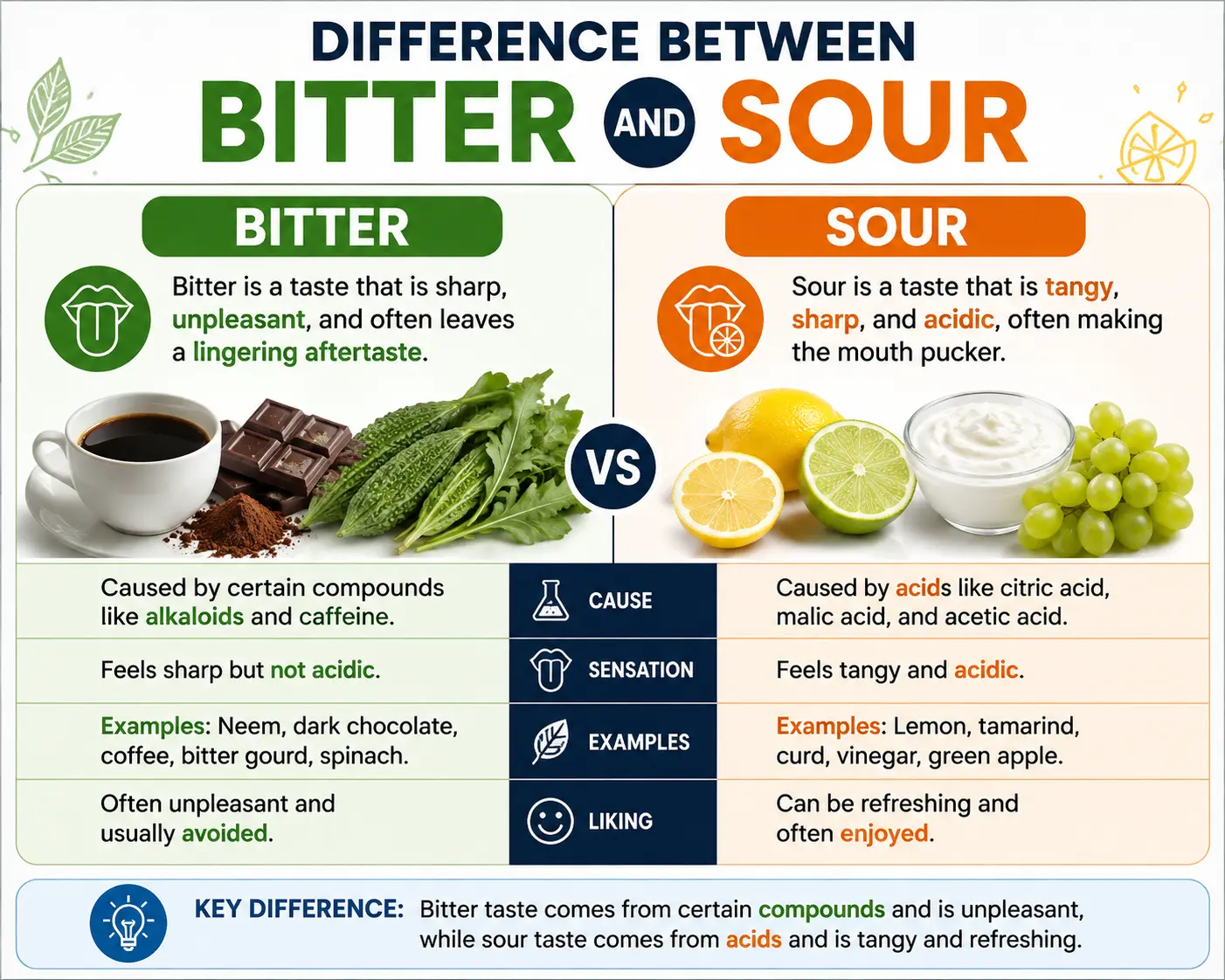
The difference between bitter and sour is a topic that many people find confusing. Often, the words are used interchangeably in everyday language, but in reality, they refer to distinct flavors that significantly impact our perception of food and beverages. Understanding these differences is not only helpful for food lovers but also for those who want to refine their palate and enjoy a richer culinary experience. In this article, we’ll explore in depth what these flavors are, how they are perceived, their origins, and their presence in various foods and drinks.
Definition of flavors
Flavors are sensations we experience through our taste buds. These are tiny structures on the tongue that detect different types of chemical compounds present in food. The perception of flavor is comprised of five basic tastes: sweet, salty, sour, bitter, and umami. Each of these tastes has its own set of characteristics and is triggered by different compounds. Therefore, understanding how bitter and sour differ is essential for properly appreciating food.
Bitterness is often described as a strong and unpleasant taste. This flavor is generally associated with foods and beverages containing chemical compounds such as caffeine, quinine, and certain alkaloids. In contrast, sourness is related to the presence of acids in foods, such as citric acid in lemons or acetic acid in vinegar. These acids activate our taste buds differently, resulting in a flavor experience that can be refreshing and lively.
How do we perceive bitter taste?
The perception of bitter taste is quite interesting, as it’s related to the body’s defense against potentially toxic substances. Many bitter compounds are actually toxins or poisons in nature, meaning our bodies have evolved to react negatively to them. When we taste something bitter, our tongue sends signals to the brain that can trigger unpleasant reactions, leading us to avoid these foods or drinks. This reaction is, in a way, a form of protection.
Foods that typically have a bitter taste include coffee, dark chocolate, some vegetables like kale, and certain types of beer. In cooking, bitterness can be balanced with sweet or savory flavors, creating a more complex flavor profile. For example, a dessert that combines dark chocolate with a touch of sugar can offer a richer and more enjoyable taste experience.
Bitter foods and drinks
- Coffee
- Black chocolate
- Kale
- Watercress
- IPA Beer
Coffee is a prime example of a bitter food that many people enjoy. The bitterness of coffee comes from compounds released during the roasting process. On the other hand, dark chocolate is appreciated for its complexity, where bitterness is balanced by the sweetness of sugar. In the case of beer, varieties like IPAs (India Pale Ales) are known for their strong bitterness, which comes from the hops used in their brewing.
How do we perceive sour taste?
Sourness, on the other hand, is a sensory experience often associated with freshness and vitality. Acidity in food can make a meal more refreshing and, in many cases, more flavorful. This taste is triggered by the presence of acids , such as citric acid in fruits or lactic acid in fermented dairy products. Unlike bitterness, sourness isn’t necessarily associated with a negative reaction; in fact, many people enjoy the acidity in their food.
Acidic foods, such as lemons, oranges, and yogurt, can enhance the flavor of other ingredients. For example, using lemon juice in a salad dressing can liven up a mix of vegetables, while a touch of vinegar in a dish can balance the flavors and provide an added dimension. Acidity can also help cut through the richness of a dish, resulting in a more balanced flavor experience.
Acidic foods and drinks
- Lemons
- Oranges
- Vinegar
- Yogurt
- Fermented foods like kimchi
Lemons are perhaps the best-known example of a sour food. Their juice is widely used in cooking to flavor a variety of dishes, from dressings to marinades. Oranges, while mostly sweet, also have a touch of acidity that makes them refreshing. Vinegar, meanwhile, is a staple ingredient in many cuisines, used for dressings and preserves. Fermented dairy products like yogurt have a natural acidity that gives them a distinctive flavor and can also be beneficial for digestive health.
Interaction between bitter and sour
Although bitter and sour are distinct flavors, they can often coexist in the same dish or beverage. The interplay between these flavors can create a unique and complex culinary experience. For example, in modern gastronomy, chefs often experiment with combining bitter and sour flavors to surprise their diners. A dish that combines a bitter component, such as kale, with a sour touch, such as lemon juice, can result in a burst of flavor that is both intriguing and delightful.
Furthermore, in the world of beverages, the use of bitters in cocktails has become increasingly popular. Cocktails that combine bitter ingredients, such as vermouth or bitters, with acidic elements, such as lemon or lime juice, offer a balanced experience that can appeal to a wide variety of palates. This balance of flavors is fundamental to creating well-crafted and appreciated cocktails.
Examples of combinations
- Kale salad with lemon dressing
- Gin cocktail with tonic and a touch of lime
- Dark chocolate with tart raspberries
- Steamed broccoli with soy sauce and lemon juice
Kale salad with a lemon dressing is an excellent example of how these flavors can work together. The bitterness of the kale is balanced by the acidity of the lemon, creating a fresh and healthy dish. On the other hand, a gin and tonic cocktail with a twist of lime combines the bitterness of the tonic with the acidity of the citrus, resulting in a refreshing drink. Similarly, dark chocolate paired with tart raspberries is a dessert that plays with contrasting flavors, offering a delicious and complex experience.
Cultural significance of flavors
Bitter and sour flavors are not only important in cooking, but are also deeply rooted in the culture and traditions of different societies. In many cultures, bitter and sour foods are used in rituals and celebrations. For example, in Mediterranean cuisine, the use of acidic ingredients is essential to enhance the flavors of dishes, while in some Asian cultures, bitter flavors are valued for their medicinal properties.
The appreciation of these flavors can also vary by region. In some parts of the world, bitterness may be a highly valued flavor, while in others, it may be considered unpleasant. This cultural variability in flavor perception highlights the importance of personal experience and tradition in how we enjoy food and drink.
Flavors in global gastronomy
- Mediterranean food and its use of citrus fruits
- Bitter dishes in Asian cuisine
- The influence of chocolate on Western culture
- Fermented foods in Latin American gastronomy
In Mediterranean cuisine, the use of citrus fruits like lemons and oranges is common, adding a touch of acidity to dishes. This not only enhances the flavor but also contributes a characteristic freshness to the region’s gastronomy. On the other hand, Asian cuisine features dishes that incorporate bitter flavors, such as green tea or certain vegetables, which are valued for both their taste and their health benefits. In Western culture, chocolate has had a significant impact, with dark chocolate becoming a star ingredient in desserts and sweets. Finally, in Latin American cuisine, fermented foods like kimchi and sauerkraut have gained popularity, adding acidity and complexity to dishes.
Conclusions about bitter and sour
Understanding the difference between bitter and sour tastes is essential for enjoying food and drinks more mindfully. By exploring these flavors, we can not only refine our palates but also enrich our culinary experience. The interplay between bitter and sour can offer surprising combinations that elevate gastronomy to new heights. Ultimately, each of us has the opportunity to explore and enjoy these flavors in our own kitchens, creating dishes and drinks that are not only delicious but also tell a cultural and personal story.
