

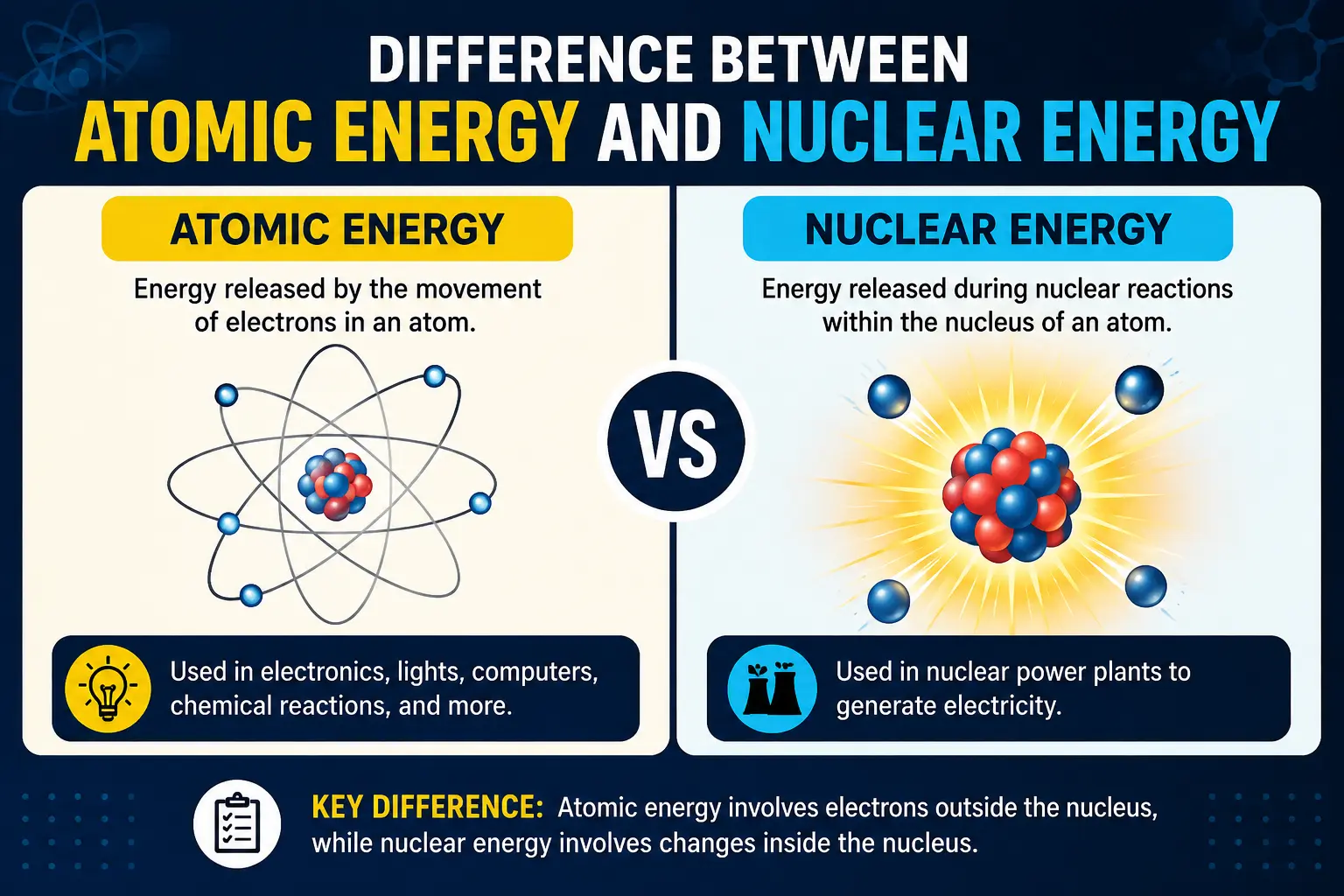
Atomic energy and nuclear energy are terms often used interchangeably, but they actually refer to different concepts within the field of physics. Atomic energy refers to the energy released from nuclear reactions, while nuclear energy refers to the technology and applications that utilize that energy. Understanding the differences between these two terms is crucial to appreciating their impact on modern society and the future of energy.
What is atomic energy?
Atomic energy is the type of energy released from the fission or fusion of atomic nuclei. In fission, a heavy nucleus splits into lighter nuclei, releasing a large amount of energy. This process occurs in nuclear reactors and atomic bombs. On the other hand, in fusion, light nuclei combine to form a heavier nucleus, also releasing energy. This is the process that powers stars, including our Sun. Both processes are fundamental to understanding how atomic energy is produced.
An important aspect of atomic energy is its ability to release energy efficiently. For example, the fission of just one gram of uranium can release as much energy as burning several tons of coal. This makes atomic energy a very powerful energy source, but it also poses challenges in terms of safety and waste management. Atomic energy, therefore, has great potential, but it must also be handled with care.
What is nuclear energy?
Nuclear energy, on the other hand, refers to the practical applications of atomic energy. This includes the use of nuclear reactors to generate electricity, as well as applications in medicine and technology. Nuclear reactors are facilities designed to control nuclear fission reactions, allowing energy to be generated safely and efficiently. Through this process, thermal energy can be converted into electricity used to power homes and businesses.
In addition to electricity generation, nuclear energy also has applications in the field of medicine. For example, radiotherapy uses radioactive isotopes to treat cancer, while medical imaging uses nuclear techniques to diagnose diseases. These applications demonstrate that nuclear energy has a significant impact beyond power generation, positively affecting people’s health and well-being.
Key differences between atomic energy and nuclear energy
One of the main differences between atomic and nuclear energy is their focus. Atomic energy focuses on the release of energy through nuclear reactions, while nuclear energy focuses on how that energy is used in practical applications. This conceptual difference is crucial for understanding how these forms of energy are perceived and managed in society. Some of the key differences are detailed below:
- Definition: Atomic energy refers to the energy released in nuclear reactions, while nuclear energy refers to the technologies that utilize that energy.
- Applications: Atomic energy is fundamental in processes such as fission and fusion, while nuclear energy is applied in the generation of electricity and in medicine.
- Safety: Atomic energy can be dangerous if not handled properly, while nuclear energy relies on safety protocols to minimize risks.
Nuclear fission
Nuclear fission is one of the most important processes related to atomic energy. In this process, a heavy nucleus, such as uranium-235 or plutonium-239, splits into lighter nuclei when bombarded by neutrons. This process not only releases a large amount of energy but also produces more neutrons, which can cause further fissions in a chain reaction. This property is what allows nuclear reactors to generate a constant amount of energy over extended periods.
The fission process takes place in a controlled environment within a nuclear reactor. Reactors are designed to moderate the speed of neutrons and absorb the released energy, ensuring that the chain reaction remains at a safe and controlled level. However, fission also presents challenges in terms of nuclear waste management, as fission products are often radioactive and require proper handling to avoid risks to health and the environment.
Nuclear fusion
Nuclear fusion is the opposite of fission. Instead of splitting heavy atomic nuclei, fusion involves combining light nuclei to form a heavier nucleus. This is the process that occurs inside stars, where hydrogen fuses to form helium, releasing a tremendous amount of energy in the process. Fusion has the potential to be a much cleaner and more abundant energy source than fission, since the fuels used, such as deuterium and tritium, are isotopes of hydrogen that can be obtained from seawater.
Despite its allure, nuclear fusion presents significant technical challenges. Maintaining the necessary conditions for fusion to occur, such as extremely high temperatures and pressures, is a major obstacle. Research is currently underway worldwide to develop fusion reactors that can produce energy efficiently and safely. If successful, fusion could revolutionize how we generate energy and help mitigate climate change.
Advantages and disadvantages of nuclear energy
Nuclear energy offers several advantages that make it attractive as an energy source. First, it is a very efficient energy source. As mentioned earlier, the amount of energy released by the fission of a small nucleus is enormous compared to fossil fuels. This means that less fuel is required and less waste is generated compared to other energy sources.
Furthermore, nuclear energy produces minimal greenhouse gas emissions, making it a cleaner option compared to power plants that use coal or gas. This is especially relevant in the context of climate change, where reducing emissions is crucial for protecting the environment. However, despite these advantages, nuclear energy also has significant drawbacks that must be considered.
- Radioactive waste: Managing nuclear waste is a major challenge. Fission products are radioactive and must be stored safely for thousands of years.
- Risks of accidents: Although nuclear reactors are safe, accidents can happen, as seen in Chernobyl and Fukushima, raising safety concerns.
- Costs: The construction and maintenance of nuclear reactors are expensive, which may make nuclear power unfeasible in all regions.
The future of nuclear energy
The future of nuclear energy is a topic of debate among scientists, politicians, and the public. As the world seeks alternatives to fossil fuels, nuclear power could play a significant role in the transition to a more sustainable energy system. However, addressing issues of safety, waste management, and cost is crucial for nuclear energy to be a viable long-term option.
Emerging technologies, such as small-scale and modular reactors, could offer solutions to some of these challenges. These reactors are designed to be safer and more efficient, which could reduce the risks associated with nuclear power. Furthermore, research into nuclear fusion continues to advance, which could change the energy landscape in the coming decades.
Comparison with other energy sources
To better understand nuclear energy, it is helpful to compare it with other energy sources, such as fossil fuels, solar power, and wind power. Each source has its own advantages and disadvantages, and the choice of one over another depends on multiple factors, including resource availability, technology, and energy policies.
Fossil fuels, such as oil and natural gas, are energy sources that have dominated the energy supply for over a century. However, their use is associated with high emissions of carbon and other pollutants. In comparison, nuclear power produces very few emissions during operation, making it a cleaner option. However, concerns about radioactive waste and the risks of accidents remain a significant obstacle.
- Solar energy: Solar energy is a renewable source that has become increasingly popular. However, its production depends on sunlight, which limits its availability.
- Wind energy: Wind energy is also renewable and clean, but it requires suitable wind conditions and can have an impact on the landscape and local wildlife.
The role of nuclear energy in the fight against climate change
The fight against climate change is one of the greatest challenges facing humanity in the 21st century. Nuclear energy can play a key role in reducing greenhouse gas emissions, as it provides a source of energy that does not emit carbon during operation. As countries seek to meet emissions reduction targets, nuclear energy can be an integral part of the energy mix.
However, it is crucial that nuclear energy be used responsibly and safely. Investment in safer and more efficient nuclear energy technologies, as well as research into waste storage and management, are important steps to ensure that nuclear energy contributes positively to the fight against climate change. It is also essential that local communities are involved in the nuclear energy decision-making process to address their concerns and ensure public acceptance.
Education and awareness about nuclear energy
Education and awareness about nuclear energy are essential for people to understand its benefits and risks. Public perception of nuclear energy is often affected by past incidents and a lack of accurate information. Therefore, it is important to promote an open and transparent dialogue about nuclear energy and its role in the energy future.
Schools and universities can play a crucial role in nuclear energy education. Including nuclear energy topics in curricula can help students understand the science behind nuclear power and its applications. Furthermore, organizations and governments can conduct awareness campaigns to inform the public about advancements in nuclear technology and its contribution to a sustainable future.
Conclusions on atomic and nuclear energy
Atomic energy and nuclear energy are interrelated concepts that play a crucial role in power generation and various technological applications. While they share certain similarities, they also have significant differences that are important to understand. Atomic energy refers to the energy released in nuclear reactions, while nuclear energy focuses on the practical applications of that energy.
The future of nuclear energy will depend on how the challenges associated with safety, waste management, and public perception are addressed. With technological advancements and a focus on sustainability, nuclear energy could become an integral part of the solution to meet the world’s growing energy demands while combating climate change.
