

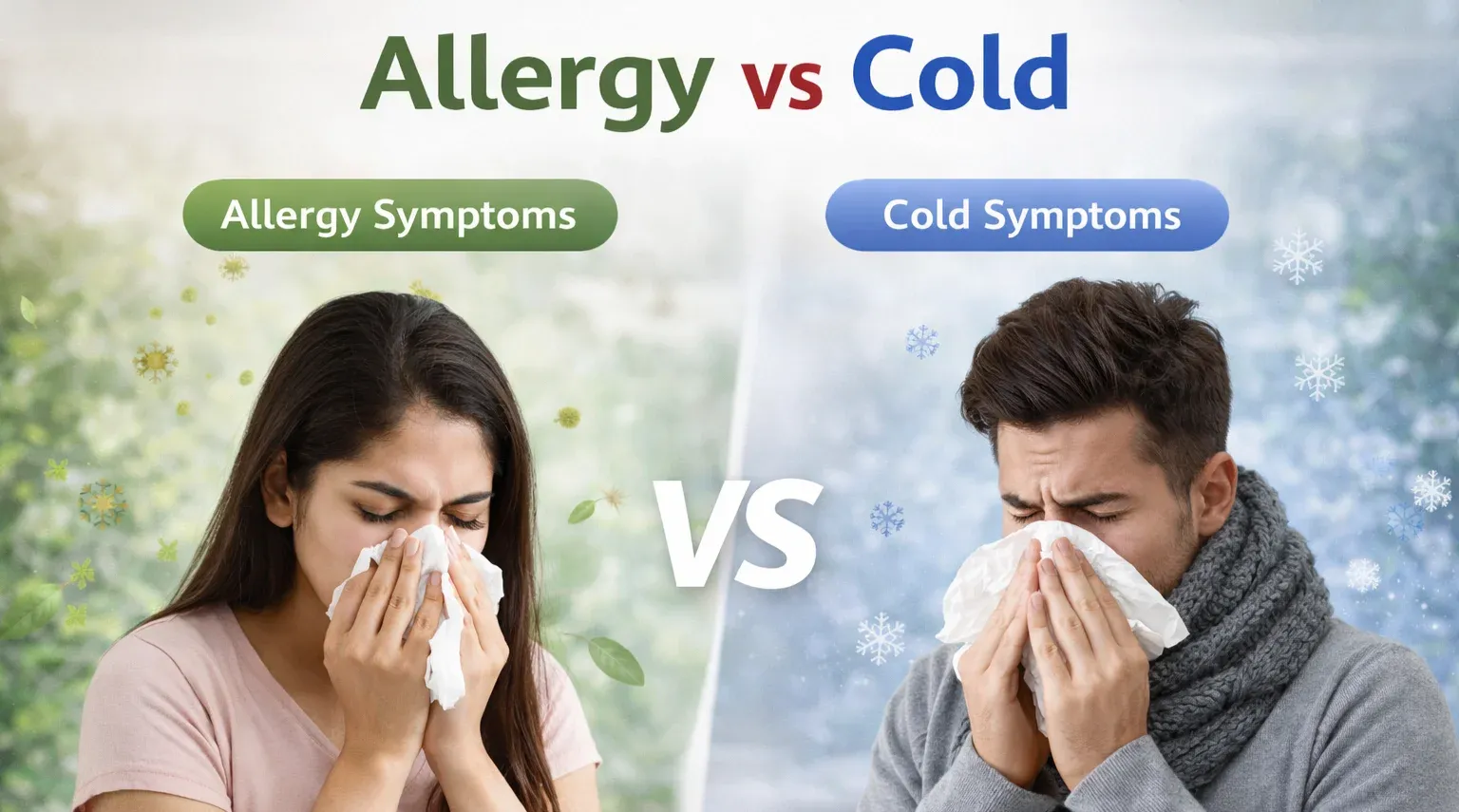
It’s not just our perception. Healthcare professionals also acknowledge that the number of allergy sufferers increases every year , largely due to climate change and the longer pollen season. As a result, the familiar and bothersome symptoms appear: itchy nose, throat, and eyes, rhinitis, sneezing, nasal congestion, runny nose, and watery eyes.
” Rhinitis can impair quality of life by disrupting concentration when performing daily tasks at work or at home, interfering with people’s rest, causing physical discomfort, and decreasing work or school performance,” says Dr. Antonio Luis Valero Santiago, head of the Allergy Department at Quirónsalud Barcelona Hospital.
A study conducted among patients who attend the consultation of this service shows that around 55% have been as a consequence of suffering from allergic rhinitis (among which 60% suffer alterations in their daily life , as a result of allergies). Difference Between Cold And Allergies. How To Tell The Difference?
Allergy or cold? A common question
Many people with allergies remain undiagnosed because they mistake the symptoms for those of the common cold. The truth is that both conditions share these effects :
- Sneezing
- Nasal congestion
- Irritated eyes and throat
These are in addition to other symptoms of a common cold , such as fatigue, joint and muscle pain, and often fever. Dr. Víctor Matheu Delgado , an allergist at Quirónsalud Tenerife and Costa Adeje hospitals , points out that “the most notable difference between allergies and the common cold is that, while the symptoms of the former last for the entire duration of exposure to the allergen , in the case of the latter, they persist for a few days, around a week after their onset.”
Allergy: 8 Key Questions
- Sudden or progressive symptoms? They are unexpected and last less than a day, as in the case of pet allergies , although they can also last for weeks or months.
- Do they appear every day? Not necessarily, and symptoms may not always be present.
- What is mucus like ? It’s clear, very runny, similar to water …
- Does it affect the eyes? Yes, it can cause itching, redness, and tearing.
- Are there sneezes ? Yes , and they are repeated continuously.
- What is the cough like ? It is usually dry, due to irritation of the bronchi or throat.
- Does it cause fever? No.
- Is there general malaise ? Allergies don’t affect you in general, but they can be related to a feeling of tiredness.
Common cold: 8 signs to differentiate it
- Sudden or gradual symptoms? They appear gradually, which is why we often accompany it with the expression “I feel like I’m coming down with something.” Furthermore, the effects of a cold last more than a day; in fact, they usually last for a week, provided the illness progresses favorably and without complications such as sinusitis, bronchitis, or pneumonia.
- Do they appear every day? Yes, with a cold, the symptoms are noticeable every day while it lasts.
- What does mucus look like ? It is usually thicker and yellow or green in color , being the most prominent symptom of a cold.
- Are there sneezes ? Yes, although both sneezing and itching are secondary , overshadowed by nasal mucus. Furthermore, nasal symptoms are often accompanied by discomfort in the throat or ears, or both simultaneously.
- Does it affect the eyes ? Eye effects are not usually observed.
- What is the cough like? It is a cough that is usually accompanied by phlegm .
- Does it cause fever? Yes, fever may occur, although not in all cases.
- And general malaise? It’s common to notice muscle pain, exhaustion, and a general feeling of malaise throughout the body .
How to diagnose allergies?
To ensure that all those affected receive proper treatment, our allergist Matheu advises that anyone with any suspicion should consult a specialist , who will be able to determine the trigger of the possible allergy and provide a remedy or alleviate the symptoms.
For her part, Dr. Elena Sierra Maestro , a specialist in The Allergy Department at Quirónsalud University Hospital in Madrid adds that “if allergy-related symptoms are suspected, the corresponding tests should be performed, including skin prick tests and IgE antibody testing .” This way, it can be confirmed whether or not the person is allergic.
Tips for allergy sufferers
Once an allergy has appeared, it’s best to take precautions such as:
- Avoid going outside when pollen levels are very high or it is windy.
- Close the windows at home.
- Driving with the car windows closed.
- Pollen filters in the car’s air conditioning.
- Shower when you get back from outside to remove any pollen that may remain in your hair.
- Wear sunglasses.
On the other hand, it’s important to remember that allergy medications are very effective, and that, once prescribed by a specialist, allergy shots can become the most effective remedy. “Today, the high efficacy of new generations of allergy vaccines , with increasingly effective and potent extracts, as well as new immunotherapy administration guidelines, mean that treatments are highly effective in improving the quality of life for patients with pollen allergies,” .
