

In the world of technology, it’s common to hear terms like hacker and cracker. Although many people use these terms interchangeably, they actually have different meanings. Understanding these differences is crucial, especially in a context where cyber security is increasingly relevant. In this article, we’ll explore in depth the characteristics, motivations, and actions of hackers and crackers, as well as their implications in today’s society.
Definition of Hacker
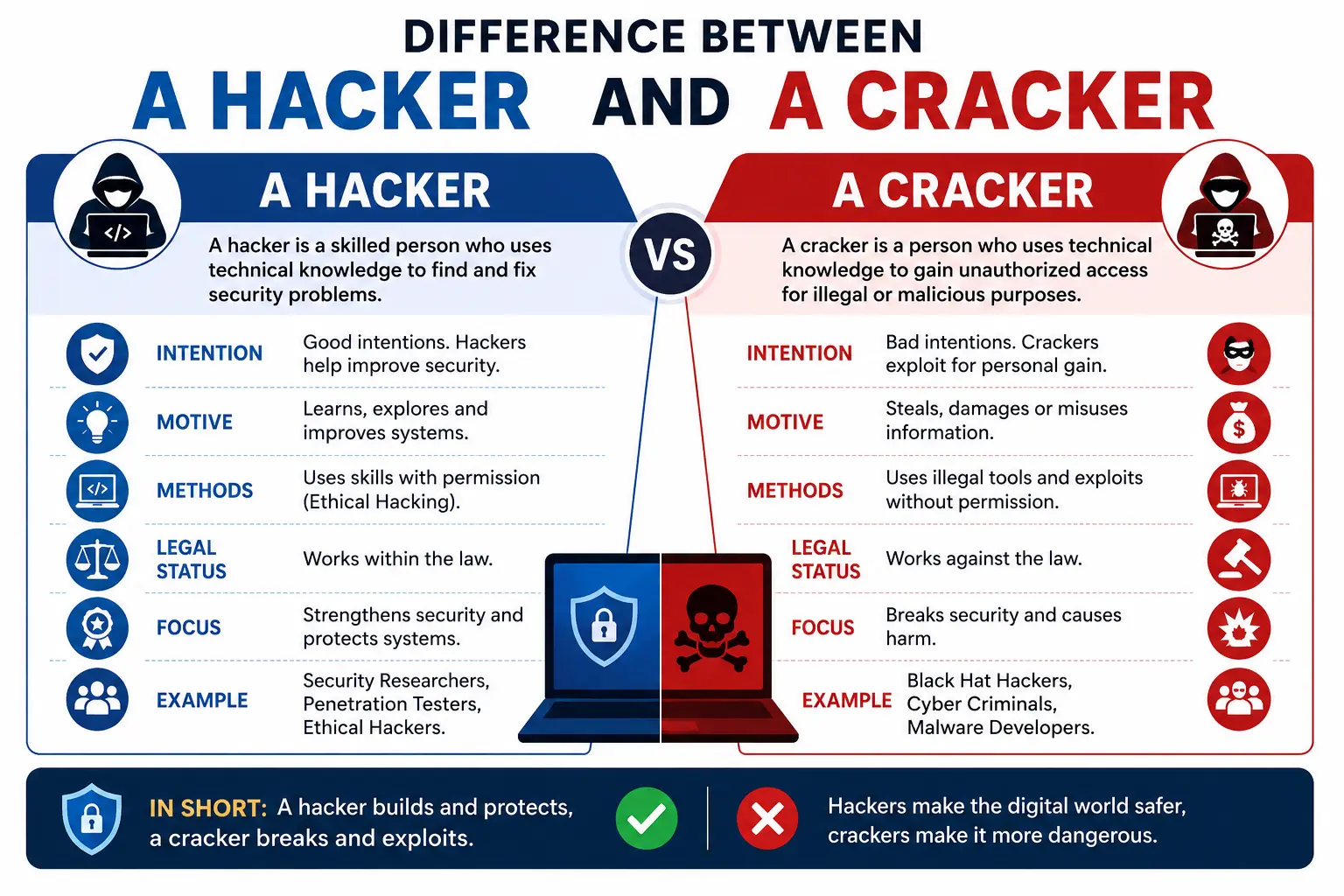
A hacker is someone who explores computer systems and networks to understand how they work. Hackers are often seen as technology enthusiasts who want to learn and share their knowledge. Their primary goal is to find ways to improve system security, not to damage it. There are different types of hackers, and their classification can vary depending on their intentions and methods. These include ethical hackers, white hat hackers, and black hat hackers.
Ethical hackers, also known as “white hat hackers,” are those who use their skills to help organizations protect their systems. They work in collaboration with companies to identify vulnerabilities and propose solutions. Their role is fundamental in the cyber security industry, as they contribute to strengthening defenses against malicious attacks. On the other hand, black hat hackers are those who use their skills for illegal activities, such as data theft or the creation of malware.
The motivation behind hacking can vary. Some seek intellectual challenge, others want to contribute to the technology community, while still others may be driven by financial motives. However, in general, hackers tend to have a more positive approach to technology and cyber security. As the digital world continues to evolve, the role of ethical hackers becomes increasingly important in defending against cyber threats.
Definition of Cracker
A cracker, on the other hand, is someone who uses their skills to breach a system’s security with the intent to cause harm or steal information. Unlike hackers, crackers don’t aim to improve system security; rather, they seek to exploit it for their own gain. Crackers are often associated with illegal activities and can be responsible for a variety of cyber crimes, such as identity theft, financial fraud, and malware distribution.
The distinction between hackers and crackers is crucial, especially in the context of cyber security. While hackers seek to protect and improve systems, crackers are motivated by the desire to cause harm. This can include creating computer viruses, infiltrating protected networks, and gaining unauthorized access to confidential information. Crackers’ activities not only affect businesses but can also jeopardize the privacy and security of individuals.
In many cases, hackers use sophisticated techniques to carry out their attacks. This can include the use of specialized software, social engineering, and phishing techniques. As technology advances, so do hackers’ tactics, making cyber security a constantly evolving field. Organizations must always be vigilant and prepared to adapt to the new threats posed by hackers.
Key differences between Hackers and Crackers
The main difference between hackers and crackers lies in their intentions and actions. While hackers seek to explore and improve systems, crackers are dedicated to exploiting them. This difference in approach is fundamental to understanding how both groups interact with technology and security. Below are some of the most notable differences between hackers and crackers:
- Intent: Hackers seek to learn and protect, while crackers seek to damage and steal.
- Activities: Hackers can perform penetration tests and security audits, while crackers can carry out denial-of-service attacks or steal personal information.
- Impact: Ethical hackers contribute to security, while crackers pose a threat.
- Collaboration: Hackers usually work with companies and organizations, while crackers operate clandestinely.
It’s important to note that not all hackers are crackers, but all crackers use skills that could be considered hacking. This blurred line between the two groups sometimes leads to confusion, but it’s essential for understanding the field of cyber security. Classifying skills and motivations is key to effectively addressing cyber threats.
Types of Hackers
Within the world of hacking, there are different categories that help define the approach and intentions of hackers. Some of the most common are:
- Ethical Hackers: Also known as white hat hackers, these are professionals who use their skills to improve system security. They work in collaboration with companies to identify and fix vulnerabilities.
- Black Hat Hackers: These are individuals who use their skills for illegal and malicious activities. Their goal is to exploit systems for personal gain or to cause harm.
- Gray Hat Hackers: These hackers fall somewhere in between. They may engage in illegal activities, but they often inform organizations about vulnerabilities they find.
- Red Hat Hackers: They dedicate themselves to pursuing crackers and stopping their illegal activities. They act as watchdogs in the digital world.
Each of these types of hackers has a different approach to technology and security. While ethical hackers seek to protect and improve, black hat hackers can pose a significant threat. On the other hand, gray hat and red hat hackers represent a more nuanced approach, which can be either positive or negative depending on the circumstances. Understanding these differences is essential for addressing cyber security challenges effectively.
Types of Crackers
Like hackers, crackers can also be classified into different categories based on their methods and objectives. Some of the most common categories include:
- Software Crackers: These crackers specialize in bypassing software protection, such as program piracy or license removal. Their goal is to access paid software without paying for it.
- Network Crackers: They specialize in infiltrating networks to steal information, disrupt services, or cause damage. They use techniques such as sniffing and spoofing to carry out their attacks.
- Malware Crackers: They create and distribute malicious software that can infect systems and steal data. This includes viruses, Trojans, and ransomware.
Each type of hacker has its own tactics and techniques, making defense against them a constant challenge. Organizations must be aware of these different categories to develop effective cyber security strategies. Classifying hackers allows companies to identify and mitigate threats more efficiently, thereby protecting their systems and data.
Impact on Society
The impact of hackers and crackers on society is significant and multifaceted. On the one hand, ethical hackers play a crucial role in improving cyber security. Their work helps protect organizations from cyber attacks, safeguarding sensitive data and ensuring business continuity. Furthermore, they foster innovation in technology, as many of them contribute to the development of new security tools and solutions.
On the other hand, hackers pose a constant threat to information security. Their activities can have devastating consequences, not only for businesses but also for individuals. Theft of personal data, financial fraud, and privacy breaches are just some of the repercussions that can arise from hacker attacks. A loss of trust in technology and digital platforms can also be a significant side effect.
Furthermore, the fight between hackers and crackers has led to an increased demand for cyber security professionals. Companies are constantly seeking experts who can protect their systems and data from the threats posed by crackers. This has resulted in a growing cyber security industry that focuses not only on defense but also on education and awareness of computer security.
Legislation and Ethics
The distinction between hackers and crackers also raises ethical and legal issues. In many countries, crackers’ activities are illegal and can result in severe consequences, including imprisonment. However, ethical hackers operate within a legal framework and are valued for their contributions to cyber security. This has led to the creation of laws and regulations that aim to protect both individuals and organizations from cyber attacks.
Cyber security laws vary by country, but many nations have implemented specific legislation to address cyber crime. These laws often include provisions to prosecute hackers and protect victims of their actions. At the same time, it is important that laws also recognize and protect ethical hackers, who play a crucial role in defending against cyber threats.
Beyond legislation, ethics in hacking is a subject of ongoing debate. Ethical hackers must navigate a complex environment where the lines between legal and illegal can be blurred. The responsibility to report vulnerabilities and act ethically is fundamental to maintaining the integrity of the cyber security field. This raises questions about how hackers’ actions should be handled and how a cooperative rather than confrontational environment can be fostered.
The Future of Cyber Security
As technology continues to evolve, so do cyber threats. The future of cyber security will depend largely on the ability of hackers and crackers to adapt to new technologies and methods. Organizations will need to be prepared to face increasingly complex and sophisticated challenges, requiring a combination of technical and strategic skills.
Collaboration between ethical hackers and businesses will be essential to creating a safer digital environment. Cyber security training and education initiatives will become increasingly important, as a skilled workforce is needed to address emerging threats. Furthermore, research into new technologies, such as artificial intelligence and machine learning, will play a crucial role in defending against cyber attacks.
Finally, public awareness of cyber security will also be crucial. As more people connect to the internet and use digital devices, it is important that they understand the associated risks and how to protect themselves. Online safety education and the promotion of safe practices will help create a safer environment for all technology users.
