

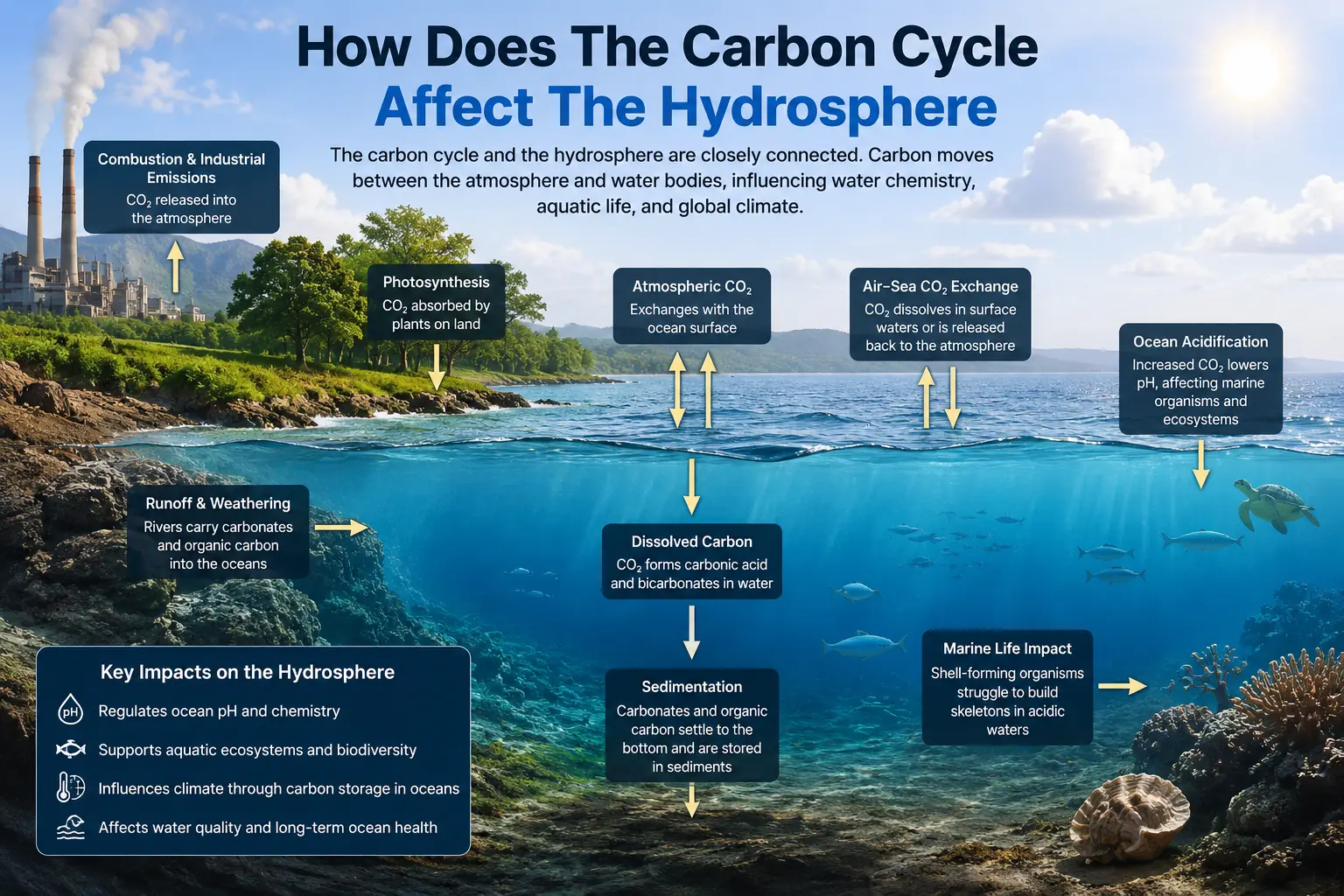
The carbon cycle is a fundamental process that describes how carbon moves through different components of the Earth, including the atmosphere, biosphere, lithosphere, and hydrosphere. The hydrosphere includes all the water on the planet, such as oceans, rivers, lakes, and groundwater. This cycle is essential for life on Earth, as carbon is a key element in organic molecules, such as carbohydrates, proteins, and nucleic acids. In this article, we will explore how the carbon cycle affects the hydrosphere and the importance of this process for ecological balance.
The carbon cycle: an overview
The carbon cycle involves several processes that allow carbon to be transferred between different reservoirs. This cycle includes photosynthesis, respiration, decomposition, and combustion. During photosynthesis, plants absorb carbon dioxide (CO2) from the atmosphere and use it to produce energy. In turn, during respiration, organisms release CO2 back into the atmosphere. The decomposition of organic matter also releases carbon into the environment, while the combustion of fossil fuels and biomass adds more CO2 to the atmosphere.
The carbon cycle also includes the storage of carbon in different reservoirs. For example, the oceans act as a large carbon sink, absorbing a significant amount of CO2 from the atmosphere. This process is crucial, as it helps regulate the planet’s climate. However, increased CO2 emissions due to human activities, such as the burning of fossil fuels, have disrupted this cycle, which can have serious consequences for the hydrosphere and the global climate.
The role of the hydrosphere in the carbon cycle
The hydrosphere plays an essential role in the carbon cycle by acting as a carbon reservoir and a medium for exchange. The oceans, in particular, are responsible for absorbing approximately 30% of the CO2 emitted by human activities. This absorption process occurs through the interaction between water and air, where CO2 dissolves in the water. This exchange is vital for climate regulation, as it helps reduce the concentration of greenhouse gases in the atmosphere.
In addition to absorbing CO2, the hydrosphere also participates in the production of organic carbon through aquatic organisms. Phytoplankton, for example, photosynthesize at the ocean surface, absorbing CO2 and releasing oxygen. These organisms are fundamental to the marine food chain and the balance of the aquatic ecosystem. The production of organic carbon in the oceans contributes to the formation of sediments, which in turn store carbon for extended periods.
Impacts of climate change on the hydrosphere
Climate change, driven largely by increased greenhouse gas emissions, has significant effects on the hydrosphere and the carbon cycle. One of the most notable impacts is ocean acidification. When the oceans absorb CO2, it combines with water to form carbonic acid, which lowers the water’s pH. Acidification affects many marine organisms, especially those that rely on calcium carbonate to form their shells and skeletons, such as corals and mollusks.
Furthermore, the increase in water temperature due to global warming affects the oceans’ ability to absorb CO2. Warmer water has lower solubility for the gas, meaning less CO2 can be absorbed by the oceans. This phenomenon can lead to an increase in the concentration of CO2 in the atmosphere, which in turn can intensify climate change. These changes in the hydrosphere can also alter ocean currents, affecting weather patterns and the distribution of nutrients in the water.
The importance of aquatic ecosystems
Aquatic ecosystems, such as wetlands, rivers, and oceans, are crucial for the carbon cycle and the health of the hydrosphere. These ecosystems are not only habitats for a diversity of species but also act as carbon sinks. Wetlands, for example, store large amounts of carbon in their vegetation and soil, helping to mitigate climate change. However, the destruction of these ecosystems, often due to human activities such as urbanization and agriculture, releases stored carbon and contributes to global warming.
Rivers also play a vital role in the carbon cycle by transporting organic matter from land to the oceans. This organic matter decomposes in the water, releasing nutrients and carbon that are used by aquatic organisms. The health of river ecosystems is essential for maintaining the balance of the carbon cycle, and any disruption, such as pollution or dam construction, can negatively impact this process.
Actions to mitigate the impact of the carbon cycle on the hydrosphere
It is essential to take action to mitigate the impact of the carbon cycle on the hydrosphere and the global climate. One of the most effective actions is reducing CO2 emissions. This can be achieved by transitioning to renewable energy sources, such as solar and wind power, which do not emit greenhouse gases. Furthermore, promoting sustainable practices in agriculture and forestry can help increase carbon sequestration in the soil and vegetation.
The conservation and restoration of aquatic ecosystems are also crucial. Protecting wetlands and restoring degraded areas can improve these ecosystems’ capacity to store carbon. Reforestation of riparian areas and the creation of protected areas in the oceans are examples of actions that can strengthen the hydrosphere’s resilience to climate change.
Future research and the carbon cycle
Research on the carbon cycle and its relationship to the hydrosphere is a constantly evolving field. It is important to continue investigating how climate change affects carbon dynamics in the oceans and other bodies of water. Climate science and biogeochemistry are key disciplines for understanding these processes and developing effective mitigation strategies.
Studies on the role of marine organisms in the carbon cycle are also essential. Understanding how changes in water temperature and acidification affect photosynthetic organisms, such as phytoplankton, can provide valuable insights into the future of the carbon cycle in the hydrosphere. Furthermore, research into emerging technologies for capturing and storing carbon can offer innovative solutions to address climate change.
Education and awareness about the carbon cycle
Education and awareness about the carbon cycle and its impact on the hydrosphere are fundamental to fostering positive change. Communities and individuals must understand the importance of their daily actions in relation to the carbon cycle. Educational programs in schools and community organizations can help raise awareness about the need to care for aquatic ecosystems and reduce their carbon footprint.
Furthermore, it is important to encourage public participation in conservation and restoration initiatives. River and beach cleanups, as well as participation in reforestation projects, can empower people and foster a sense of responsibility toward the environment. Collaboration among governments, non-governmental organizations, and citizens is essential to address the challenges of the carbon cycle and protect the hydrosphere.
