

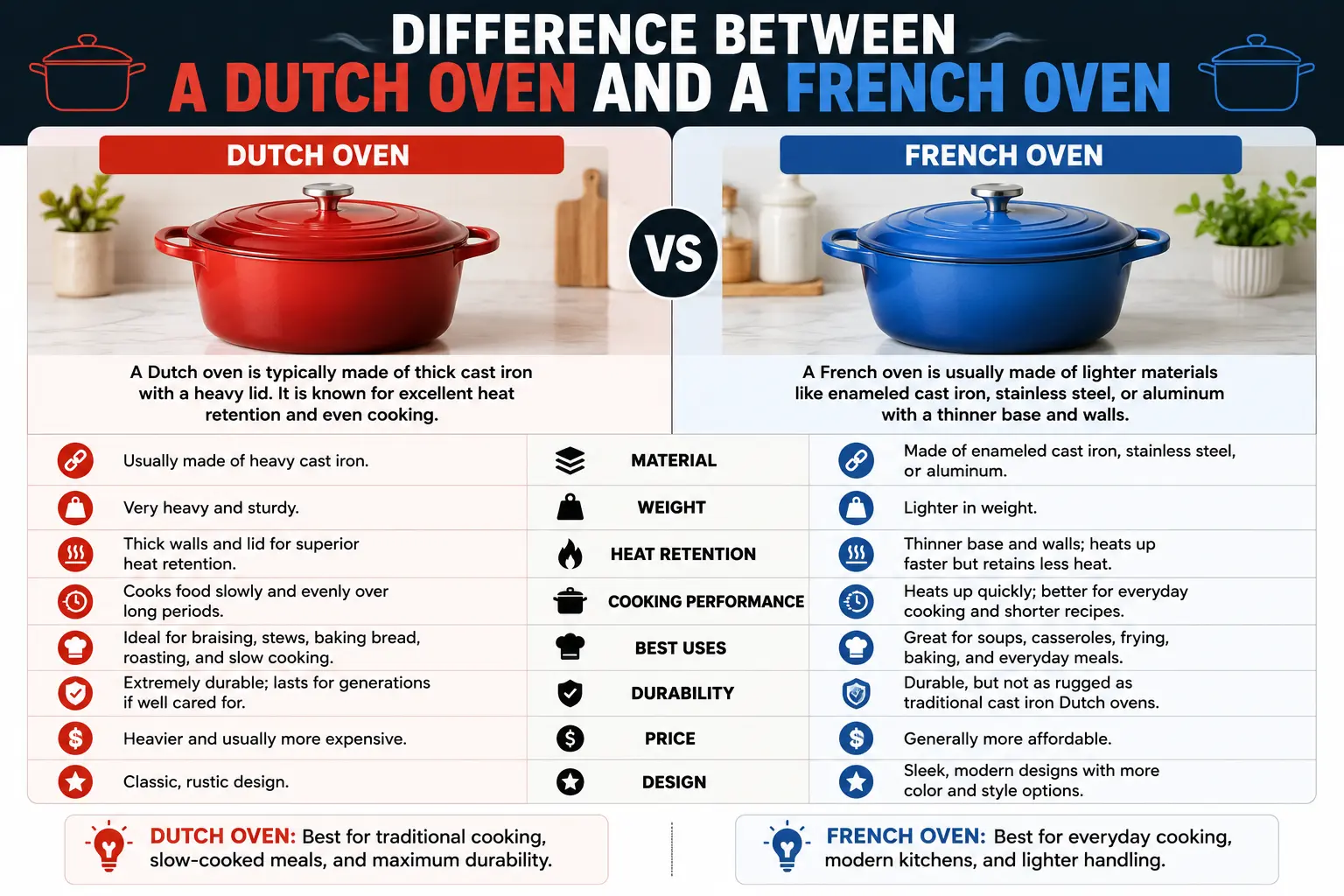
When we talk about kitchen utensils, questions often arise about the differences between various types of ovens and pots. In this case, we’ll focus on the difference between a Dutch oven and a French oven. Both are highly valued kitchen tools among chefs and cooking enthusiasts, but each has its own unique characteristics. Throughout this article, we’ll explore in detail the features, uses, and benefits of each, allowing you to choose the best one for your culinary needs.
Features of the Dutch Oven
The Dutch oven is a cooking utensil that has been used for centuries. It is generally made of cast iron and is known for its ability to retain heat efficiently. This type of oven typically has a heavy lid that helps seal in moisture and flavor. The cast iron construction allows for even cooking, making it an ideal choice for stews, soups, and casseroles. Dutch ovens often come in a variety of colors and finishes, giving them aesthetic appeal in the kitchen.
One of the most outstanding features of the Dutch oven is its versatility. You can use it on the stovetop, in the oven, or even over a campfire. This makes it perfect for various cooking techniques, such as boiling, roasting, and baking. Furthermore, its robust and durable design ensures that, with proper care, it can last a lifetime. Some models are even dishwasher-safe, making cleaning a breeze. However, due to its weight, it’s important to handle it carefully to avoid accidents in the kitchen.
Features of the French Oven
On the other hand, the French oven, also known as a cocotte or cast iron pot, shares some similarities with the Dutch oven, but has its own distinctive characteristics. Like the Dutch oven, the French oven is made of cast iron, but it often differs in its more elegant and streamlined design. French ovens are typically lighter and have a smoother finish, making them more visually appealing. Furthermore, their lids are designed to retain moisture and heat, which is essential for optimal cooking.
One of the advantages of a French oven is its ability to cook slowly. This makes it an excellent choice for preparing dishes that require a long cooking time, such as stews or soups. Like a Dutch oven, a French oven can be used on the stovetop or in the oven, making it versatile. However, it’s important to note that some French oven models are not suitable for direct heat sources, such as campfires or grills, which somewhat limits their use compared to a Dutch oven.
Comparison of Materials and Design
Both ovens are primarily made of cast iron, but their design and construction can vary. Dutch ovens tend to be more robust and heavier, while French ovens can be lighter and have a more streamlined design. This weight and design can influence how they are handled and used in the kitchen. For example, if you’re looking for a utensil that’s easy to transport, a French oven might be the better choice due to its lighter weight. On the other hand, if you prefer a utensil that offers exceptional heat retention, a Dutch oven might be more suitable.
Furthermore, the finish of both types of ovens can vary. Some Dutch ovens come with a colorful glaze that is not only attractive but also helps prevent rust. In contrast, French ovens may have more elegant and less colorful finishes, allowing them to blend in better with a dining table. This aesthetic aspect can be an important factor for those who value the presentation of their cookware.
Common Uses of Each Oven
The uses for each oven can be quite varied, but there are some key differences in how they are commonly used. The Dutch oven is ideal for slow cooking, as its heavy design allows for even heat distribution. It’s perfect for preparing stews and casseroles, as well as baking bread. Many people also use it for recipes that require long cooking times, such as roasting meat or legumes. Thanks to its ability to retain moisture, dishes cooked in a Dutch oven tend to be more flavorful and tender.
- Stews and casseroles
- Bread and pastries
- Cooking legumes
- Barbecues
On the other hand, the French oven is commonly used for dishes that require a shorter and less intense cooking time. It’s ideal for preparing soups, rice dishes, and oven-baked dishes that don’t need prolonged cooking. Furthermore, its lighter design makes it easier to handle for recipes that require frequent stirring of ingredients. French ovens are also excellent for preparing dishes that require even browning, thanks to their ability to heat up quickly.
- Soups and broths
- Rice and risottos
- Baked dishes
- Quick preparations
Maintenance and Care
Proper maintenance and care of both types of ovens is crucial to ensuring their longevity. Generally, both Dutch and French ovens require similar care, as they are both made of cast iron. It is essential to avoid using harsh soaps or abrasive scouring pads, as these can damage the enamel and the iron surface. Instead, washing with warm water and a soft cloth is recommended. To maintain their quality, it is important to dry them completely after washing to prevent rust.
In addition, it’s advisable to season cast iron cookware regularly. This process involves applying a thin layer of vegetable oil and heating the oven to a high temperature for a specific amount of time. This not only helps create a non-stick surface but also prevents rust. By doing so, you ensure that your cookware maintains its performance and durability over time.
Price and Accessibility
The price of Dutch and French ovens can vary considerably depending on the brand, size, and design. Generally, Dutch ovens tend to be a bit more expensive, especially if they are from well-known brands like Le Creuset or Staub. However, there are more affordable options available on the market, making this kitchen appliance accessible to more people. On the other hand, French ovens typically have a wider price range, with both budget-friendly and luxury options.
When it comes to accessibility, both types of ovens can be found in kitchenware stores, department stores, and online retailers. However, it’s important to research and compare prices before making a purchase, as some stores may offer discounts or special promotions. It’s also helpful to read reviews from other users to ensure you’re choosing a good quality product that suits your cooking needs.
Conclusions about the Dutch Oven and the French Oven
In short, both the Dutch oven and the French oven are exceptional cooking tools that offer unique benefits. The choice between them will depend on your personal preferences and how you plan to use them in the kitchen. If you’re looking for a robust and versatile appliance that can withstand intense cooking, the Dutch oven might be the best option. On the other hand, if you prefer something lighter and more elegant for quick preparations, the French oven might be more suitable.
Both ovens hold a special place in the kitchen and can enhance your culinary skills, allowing you to prepare a variety of delicious dishes. Ultimately, the most important thing is choosing the appliance that best suits your needs and cooking style. No matter which you choose, both will offer a rewarding and satisfying culinary experience.
