

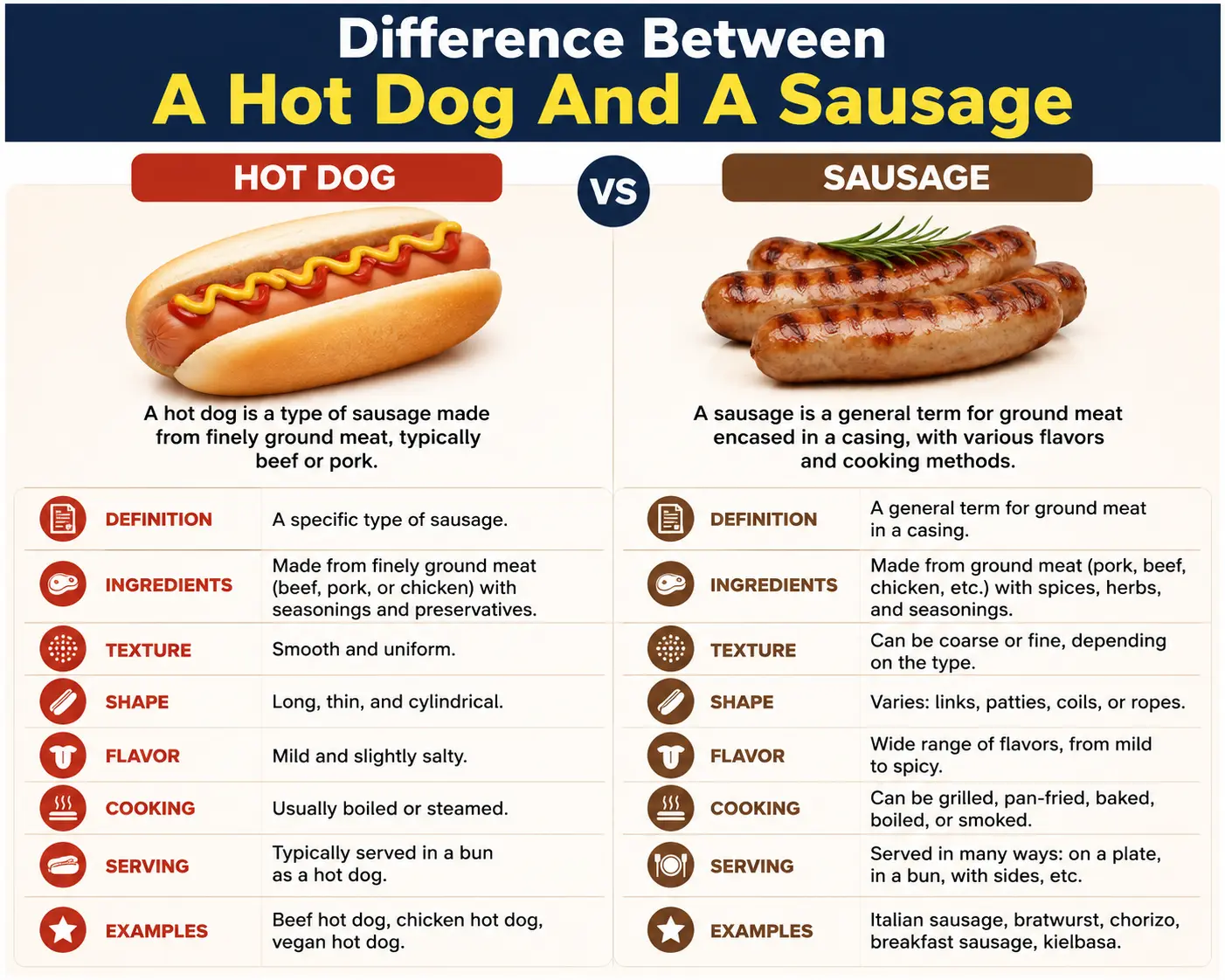
The difference between a hot dog and a sausage is a topic that often causes confusion among food lovers. Although both are meat products that may appear similar at first glance, they have distinct characteristics that make them unique. In this article, we’ll explore in depth what a hot dog is, what a sausage is, and how they differ in terms of ingredients, preparation, and consumption. Through several paragraphs, we’ll analyze these aspects so you can enjoy your meals with greater knowledge and appreciation.
What is a hot dog?
A hot dog is a type of fast food consisting of a cooked sausage, usually made of beef, pork, or poultry, placed inside an elongated bun, known as a hot dog bun. This dish is very popular in many parts of the world, especially in the United States, where it is consumed at sporting events, fairs, and barbecues. The combination of the bun and sausage is complemented by a variety of condiments such as mustard, ketchup, onions, relish, and sauerkraut. The simplicity and versatility of the hot dog have made it a favorite among children and adults alike.
The history of the hot dog dates back to the early 20th century, when German immigrants brought their sausages to America. The hot dog’s popularity grew rapidly, and it became a staple at outdoor events. Today, there are numerous variations of the hot dog, including vegetarian and vegan versions, demonstrating its ability to adapt to different dietary preferences.
What is a sausage?
Sausage is a meat product made from ground meat, fat, spices, and other ingredients. It comes in a variety of shapes, sizes, and flavors, depending on the region and culture. Sausages are often prepared as cured meats, which are smoked or cured, or simply as fresh sausages that require cooking before consumption. Sausages can be made from different types of meat, including pork, beef, chicken, and turkey, and sometimes different meats are blended to create unique flavors .
Besides being a key ingredient in hot dogs, sausages are used in a wide variety of dishes, from stews to pasta. The versatility of sausage makes it a popular ingredient in the cuisine of many cultures. In Europe, for example, there are numerous varieties of sausage, such as German bratwurst, Spanish chorizo, and Italian sausage, each with its own flavor profile and preparation method.
Differences in ingredients
One of the main differences between a hot dog and a sausage lies in the ingredients used in their preparation. While sausages can be made from a mixture of meats and spices, hot dogs generally use a specific type of sausage made with ground meat and seasoned in a particular way. The meat used for hot dogs is often of lower quality, as these products are designed to be inexpensive and affordable. Therefore, it is common to find hot dogs containing additives and preservatives to extend their shelf life.
In contrast, homemade sausages can be of higher quality and may contain fresher, more natural ingredients. Making homemade sausages, for example, allows you to control the ingredients and proportions, resulting in a healthier and tastier product. Furthermore, some artisanal sausages may use meat from organically raised or hormone-free animals, making them more appealing to health-conscious consumers.
Differences in preparation
The preparation of a hot dog and a sausage also varies significantly. Hot dogs are generally precooked & can be heated in various ways, such as boiled, roasted, or grilled. This makes them a quick and convenient option for those looking for a simple and fast meal. On the other hand, sausages may require a more elaborate cooking process, especially if they are fresh. Some sausages must be cooked thoroughly to ensure they are safe to eat, while others may be smoked or cured, giving them a distinctive flavor.
The way they are cooked can also influence the flavor and texture of the final product. For example, grilling a sausage can bring out its smoky flavor, while boiling it can cause it to lose some of its juiciness. Conversely, hot dogs, being precooked, tend to be more uniform in their preparation, which can result in a less complex flavor experience compared to a fresh, homemade sausage.
Differences in consumption
The consumption of hot dogs and sausages also presents notable differences. Hot dogs are commonly eaten at social events, such as football games or barbecues, where their ease of preparation and consumption makes them an ideal choice. The presentation of a hot dog in a bun, along with a variety of toppings, makes it an attractive food that is easy to eat with one hand. This has contributed to its popularity in fast-food culture.
On the other hand, sausages are more versatile in terms of preparation and consumption. They can be an ingredient in more elaborate dishes, such as stews, pasta, and pizzas. Furthermore, sausages can be served on their own, with side dishes, or as a main course. This makes them a more flexible option in the kitchen, allowing cooks to experiment with different flavors and combinations.
Varieties of hot dogs
There are many varieties of hot dogs that have developed in different regions of the world. Some of the most popular include the New York-style hot dog, served with onions and mustard; the Chicago-style hot dog, characterized by its variety of toppings, such as pickles, onions, tomatoes, and peppers; and the chili dog, which is covered in chili and cheese. These variations not only showcase culinary creativity but also reflect the culture and preferences of each region.
Furthermore, in recent years, there has been an increase in demand for vegetarian and vegan hot dogs, which are made from plant-based proteins and seasoned to mimic the flavor of traditional hot dogs. This has allowed people with different lifestyles and dietary restrictions to enjoy this popular dish. Innovations in hot dog production have broadened their appeal and made them accessible to a wider audience.
Sausage varieties
Like hot dogs, sausages also come in a variety of styles and flavors. Some of the most well-known include the German bratwurst, a spiced, minced pork sausage; the andouille, a smoked sausage of French origin; and the chorizo, a Spanish sausage made with pork and spices such as paprika. Each of these sausages has a unique flavor and texture, making them suitable for different recipes and cooking methods.
Sausages can also vary in size and shape. Some are thicker and longer, while others are thinner and shorter. This variability allows cooks to choose the sausage that best suits their dishes. In addition, some sausages may be smoked or cured, which gives them an extra flavor not found in fresh sausages. This diversity in sausage production offers consumers a wide range of options to explore and enjoy.
Nutritional aspects
In terms of nutrition, both hot dogs and sausages can be high in fat and sodium, which may be a concern for some people. However, the quality of the ingredients can significantly influence their nutritional value. For example, a hot dog made with lean beef can be a healthier option than one made with processed meat. On the other hand, artisanal sausages made with fresh, natural ingredients can be more nutritious and flavorful than industrially produced versions.
It’s important to read nutrition labels when choosing between hot dogs & sausages, as some products may contain additives and preservatives that aren’t ideal for your health. Portion size also plays a crucial role in nutrition. Enjoying these foods in moderation and combining them with vegetables and other healthy foods can help balance your diet and allow you to enjoy a delicious meal without compromising your health.
Conclusions about hot dogs and sausages
In short, while hot dogs and sausages may seem similar, there are significant differences between them in terms of ingredients, preparation, consumption, and variety. Both products offer a wide range of options for food lovers, and their popularity continues to grow worldwide. Understanding these differences can enrich your culinary experience and help you make more informed choices when enjoying these delicious dishes.
List of key differences
- Ingredients: Hot dogs tend to be more processed, while sausages can be more varied and fresh.
- Preparation: Hot dogs are precooked, while sausages may require more cooking.
- Consumption: Hot dogs are more common at social events; sausages are more versatile in the kitchen.
- Varieties: There are many types of hot dogs and sausages, each with its own flavor profile.
- Nutritional aspects: The quality of the ingredients can influence the nutritional value of both products.
