

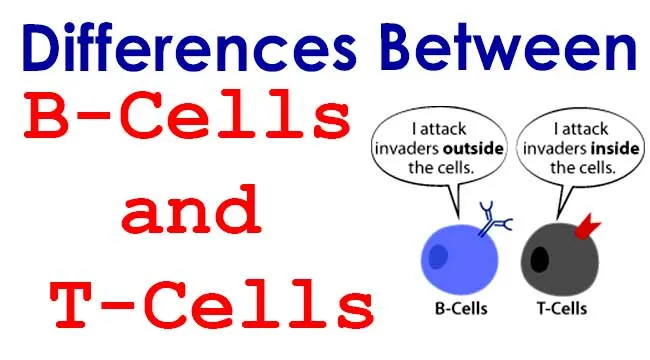
How do helper T cells activate B cells and Difference between B-cells vs. T-cells?
Helper T cells are a type of immune system cell that plays a crucial role in activating other immune system cells, especially B cells . These cells are fundamental to the adaptive immune response, as they help coordinate the body’s defense against pathogens such as viruses and bacteria. In this article, we will explore how helper T cells activate B cells, describing the processes and mechanisms involved in this interaction, which is essential for the body’s health.
What are helper T cells?
Helper T cells, also known as CD4+ T cells, are a type of lymphocyte that develops in the thymus. Their main function is to assist other cells of the immune system in carrying out their tasks. These cells are able to recognize protein fragments (antigens) presented by other immune cells through a molecule called the Major Histocompatibility Complex (MHC) . Upon binding to these antigens, helper T cells become activated and begin releasing chemical signals, known as cytokines , which are essential for the activation of B cells and other immune cells.
Helper T cells are essential not only for activating B cells, but also for activating cytotoxic T cells , which are responsible for destroying infected cells. Without the help of helper T cells, the immune response would be much less effective. Therefore, understanding their function is fundamental to understanding how the immune system protects the body.
The process of B cell activation
B cell activation is a complex process requiring the interaction of multiple components of the immune system. First, B cells must recognize a specific antigen. This occurs through receptors on the surface of B cells that are capable of binding to antigens. Once a B cell binds to an antigen, it begins to internalize and process it. This process is crucial because it allows the B cell to present fragments of the antigen on its surface, associated with MHC class II molecules.
Once the B cell has processed the antigen, it becomes an antigen-presenting cell and can interact with helper T cells. This step is crucial, as helper T cells need to recognize the same antigen as the B cell in order to activate it. The interaction between the B cell and the helper T cell occurs through the binding of MHC molecules on the B cell to T cell receptors (TCRs), which triggers T cell activation.
Interaction between helper T cells and B cells
The interaction between helper T cells and B cells is a critical moment in the immune response. When a helper T cell recognizes the antigen presented by a B cell, it is activated and begins to proliferate. This activation is mediated by costimulatory signals , which are additional interactions necessary to complete the process. One of the most important interactions occurs between the CD40 molecule on the surface of the B cell and the CD40L molecule on the surface of the helper T cell. This interaction is essential for the complete activation of the B cell.
Once this connection is established, the helper T cell begins to secrete cytokines that are crucial for the activation and differentiation of B cells. Some of the most important cytokines include IL-4 , IL-5 , and IL-21 . These cytokines stimulate B cells to divide and differentiate into plasma cells, which are responsible for producing specific antibodies against the antigen. This antibody production process is essential for the body’s defense against infections.
The role of cytokines in B cell activation
Cytokines are proteins that act as messengers in the immune system. They are produced by different types of immune cells and play a fundamental role in communication between them. In the context of B cell activation, cytokines secreted by helper T cells are essential for guiding the process. For example, IL -4 is a key cytokine that promotes the differentiation of B cells into antibody-producing cells. Furthermore, this cytokine also helps B cells switch their antibody production from IgM to IgE, which is important in allergic responses and in defense against parasites.
On the other hand, IL-5 is crucial for B cell proliferation and activation, as well as for antibody production. IL-21 also plays an important role in B cell expansion and differentiation, and has been shown to be essential for the formation of germinal centers, where B cells mature and specialize in the production of high-affinity antibodies.
The role of B cells in the immune response
B cells are responsible for producing antibodies, which are proteins that bind to specific antigens on pathogens such as viruses and bacteria. This binding neutralizes the pathogen and facilitates its elimination by other cells of the immune system. When a B cell is activated and becomes a plasma cell, it begins to secrete large quantities of antibodies into the bloodstream. These antibodies are essential for protecting the body against future infections by the same pathogen.
In addition to their role in antibody production, B cells also play a crucial part in immunological memory. After exposure to an antigen, some B cells differentiate into memory cells, which can remain in the body for years or even a lifetime. These memory cells enable a faster and more effective immune response if the body encounters the same pathogen again in the future. This is the basis for the effectiveness of many vaccines, which stimulate the production of memory B cells.
Factors that influence the activation of B cells
B cell activation depends not only on interaction with helper T cells and the presence of antigens. Several factors can influence this process. One of the most important is antigenic load , which refers to the amount of antigen present in the body. A high antigenic load can lead to more robust B cell activation, while a low load can result in a weaker immune response.
Furthermore, the location of the antigen also plays a crucial role. For example, if an antigen is present in a secondary lymphoid organ, such as the lymph nodes, B cells are more likely to be activated. On the other hand, the presence of growth factors and other cytokines in the microenvironment can also influence B cell activation. These factors can modulate the immune response and determine the effectiveness of cell activation.
Clinical implications of B cell activation
Understanding how helper T cells activate B cells has important clinical implications. For example, in autoimmune diseases, where the immune system mistakenly attacks the body’s own cells, B cell activation can become uncontrolled. In these cases, treatments can focus on inhibiting the interaction between T cells and B cells or on blocking the production of cytokines that promote this activation.
On the other hand, in the context of vaccines , the goal is to maximize B cell activation to generate an effective immune response. Vaccines often include adjuvants, which are substances that enhance the immune response to the antigen. These adjuvants can help boost the activation of helper T cells and, consequently, B cells, resulting in more effective antibody production and the formation of memory cells.
Future research on B cell activation
Research in the field of immunology continues to advance, and there are many areas where studies on B cell activation are being conducted. One current focus is understanding how helper T cells can be manipulated to enhance immune responses in the context of vaccines. This includes investigating new strategies for designing vaccines that are more effective at activating both B and T cells.
Furthermore, the research also focuses on identifying new cytokines and factors that can influence B cell activation. Understanding how these factors interact may provide new opportunities to develop treatments for autoimmune diseases, cancer, and other conditions where the immune response is dysfunctional. Collaboration between different disciplines, such as molecular biology, genetics, and bioinformatics, is driving these advances and promises to offer new insights into how to optimize the immune response.
