

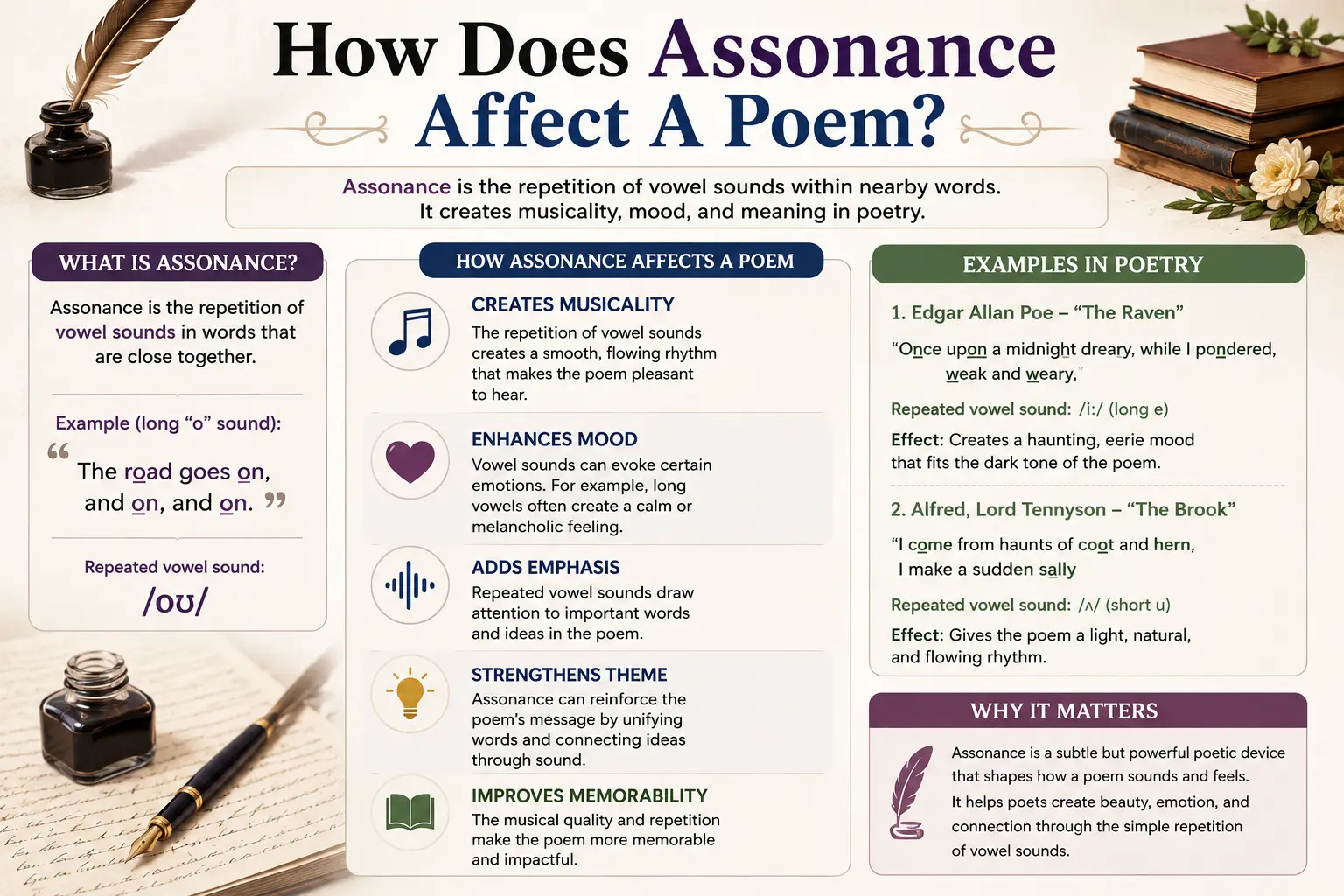
How does assonance affect a poem?
Assonance is one of the poetic techniques that has the greatest impact on the sound of a poem. This figure of speech refers to the repetition of similar sounds in nearby words within a line of verse. Assonance not only contributes to musicality but can also influence the emotion and meaning of the text. By using assonance, the poet can create a particular rhythm that resonates with the reader, making the words feel more connected to one another. In this article, we will explore how assonance affects a poem in various aspects, from its structure to its interpretation.
Assonance Definition
Assonance is defined as the repetition of vowels in nearby words. Unlike rhyme, which involves the matching of both consonants and vowels, assonance focuses only on vowels. For example, in the words “casa” (house) and “pasa” (pass), the repetition of the vowels “a” and “a” creates a sound effect. This technique is frequently used in poetry, as it helps create a particular atmosphere and emphasize certain ideas or emotions. Through assonance, the poet can guide the reader’s attention to key words, achieving a deeper effect.
The use of assonance can vary depending on the poet’s style. Some poets choose to use it subtly, while others employ it more forcefully. This flexibility allows each poet to have their own unique voice and style. Furthermore, assonance can be a powerful tool in creating poetic imagery, as the sounds can evoke specific sensations or landscapes in the reader’s mind. Assonance’s ability to transform the perception of a poem is what makes it such a valuable asset in a poet’s arsenal.
The effect of assonance on rhythm
One of the most obvious ways assonance affects a poem is through its rhythm. The repetition of similar sounds can help establish a rhythmic pattern that guides the reading of the poem. This pattern can be smooth and melodic or more abrupt and dynamic, depending on how the vowels are used. For example, a poem that uses assonance consistently can feel more musical and fluid, which can draw the reader into a more immersive experience. The musicality of the poem can make the words feel more memorable and, therefore, more impactful.
Furthermore, the rhythm created by assonance can influence how the poem’s content is perceived. A faster rhythm can convey a sense of urgency or intense emotion, while a slower rhythm can evoke tranquility or reflection. This ability of assonance to alter the poem’s rhythm is crucial, since rhythm, in turn, affects how the words and ideas presented are interpreted. Therefore, controlling rhythm through assonance becomes a powerful tool for the poet.
Assonance and image creation
Assonance also plays an important role in creating imagery within a poem. By repeating similar sounds, poets can evoke sensations and landscapes that resonate with the reader. For example, if a poem uses assonance with soft, flowing sounds, it can evoke images of tranquility and natural beauty. On the other hand, assonance with harsher or more abrupt sounds can generate images of conflict or tension. This use of sound allows the reader not only to read the words but also to feel the emotions and visualize the images presented.
Furthermore, the imagery created through assonance can be more impactful because the sound of the words can complement their meaning. For example, if a poem speaks of the sea and uses assonance with sounds that evoke gentle waves, the reader not only understands the content but also feels the calm and peace the poet is trying to convey. This link between sound and image is fundamental in poetry, as it enhances the reader’s experience, making it richer and more meaningful.
Assonance as an emotional resource
Assonance not only affects rhythm and imagery, but also has a profound impact on the emotion conveyed in a poem. The repetition of sounds can evoke specific feelings, helping to create an emotional atmosphere that envelops the reader. For example, assonance with open, soft vowels can evoke feelings of love and warmth, while closed, tense vowels can generate a sense of sadness or anguish. This ability of assonance to influence emotions is one of the reasons why it is so highly valued in poetry.
Poets often use assonance to intensify the emotional impact of a poem. By carefully choosing words that contain similar sounds, they can amplify the emotional impact of their verses. This means that a poem using assonance can resonate more deeply with the reader, eliciting more intense reactions. Furthermore, when the reader feels emotionally connected to the poem, they are more likely to remember and share it, further amplifying the effectiveness of assonance as a poetic device.
Assonance in different poetic traditions
Assonance is not exclusive to a single poetic tradition; it is found in diverse cultures and literary styles. In Spanish poetry, for example, assonance has been used since the Middle Ages in the form of songs and ballads. Poets of this era employed assonance to give musicality to their verses, making them more memorable and easier to recite. This tradition continues today, and many contemporary poets still use assonance as a fundamental resource in their work.
In Anglo-Saxon poetry, assonance has also been a common technique. Poets such as Robert Frost and Emily Dickinson have used this device to enrich their verses and create an emotional resonance in their readers. In these traditions, assonance is combined with other poetic devices, such as alliteration, to create a more complex and engaging sound effect. The diversity in the use of assonance across different poetic traditions demonstrates its versatility and its importance in creating effective poetry.
Assonance Example
To better understand how assonance can affect a poem, it’s helpful to examine some examples. One of the best-known poets who uses assonance is Pablo Neruda. In his poem “Si tú me olvidas” (If You Forget Me), you can find multiple examples of assonance that reinforce the theme of love and connection. The repeated vowels in certain lines create a melodic rhythm that complements the poem’s emotional content, making each word feel more meaningful.
Another great example is Gustavo Adolfo Bécquer ‘s poem “Rima LIII.” In this poem, assonance is used to evoke nostalgia and sadness. The repetition of sounds in key words creates a melancholic atmosphere that resonates with the reader. This use of assonance not only makes the poem more musical but also intensifies the emotional experience, allowing the reader to feel the depth of the feeling the poet is trying to convey.
Assonance in music and poetry
The relationship between assonance in poetry and music is fascinating. Both fields share the use of sounds and rhythms to create emotional experiences. Many poets have been influenced by music and have incorporated musical elements into their work through assonance. This technique helps poetry sound more like a song, which can make it more appealing to the listener or reader.
For example, singer-songwriters often use assonance in their lyrics to create a melodic effect that complements the music. Just as in poetry, the repetition of sounds in song lyrics can evoke emotions and connect listeners to the song’s message. This connection between poetry and music highlights the importance of assonance in both art forms, demonstrating how sound can be a powerful vehicle for emotional expression.
Practice of assonance in writing
For those interested in incorporating assonance into their own writing, several strategies can be helpful. First, reading aloud is essential. By doing so, you can hear how words sound together and identify opportunities to use assonance. Listening to the musicality of words can inspire new ideas and forms of expression. It is also helpful to write several drafts and experiment with different word combinations until you find those that resonate effectively.
- Try choosing a specific theme or emotion and write down related words that contain similar sounds.
- Play with the structure of your verses, looking for rhythmic patterns that align with the assonance you wish to use.
- Read other poems that use assonance for inspiration and to learn how other poets have implemented this technique.
Finally, don’t be afraid to be creative. Poetry is an open field for exploration and experimentation. Assonance can be a powerful tool for bringing your words to life, and the more you practice, the more natural it will feel in your writing. The key is to listen, experiment, and find your own poetic voice through assonance.
Challenges in the use of assonance
Despite the benefits of assonance, there are also challenges to using this technique. One of the main obstacles is preventing assonance from becoming forced or artificial. It is crucial that the use of assonance does not compromise the meaning or clarity of the poem. If words are chosen solely for their sound and not for their thematic relevance, the poem can lose its impact and become a shallow wordplay.
Another challenge is the possibility that assonance can lead to excessive repetition of sounds, which can make the poem sound monotonous or boring. It is important to balance assonance with other poetic elements, such as variety in vocabulary and verse structure. This will ensure that the poem maintains its interest and appeal throughout.
Conclusion on assonance in poetry
Assonance is a powerful tool in poetry that affects not only rhythm and imagery, but also the emotion and musicality of the poem. Through its use, poets can create works that resonate deeply with their readers, evoking feelings and emotions that transcend the words themselves. By exploring and practicing assonance, writers can enrich their own poetic voice and bring their ideas to life in new and exciting ways.
