

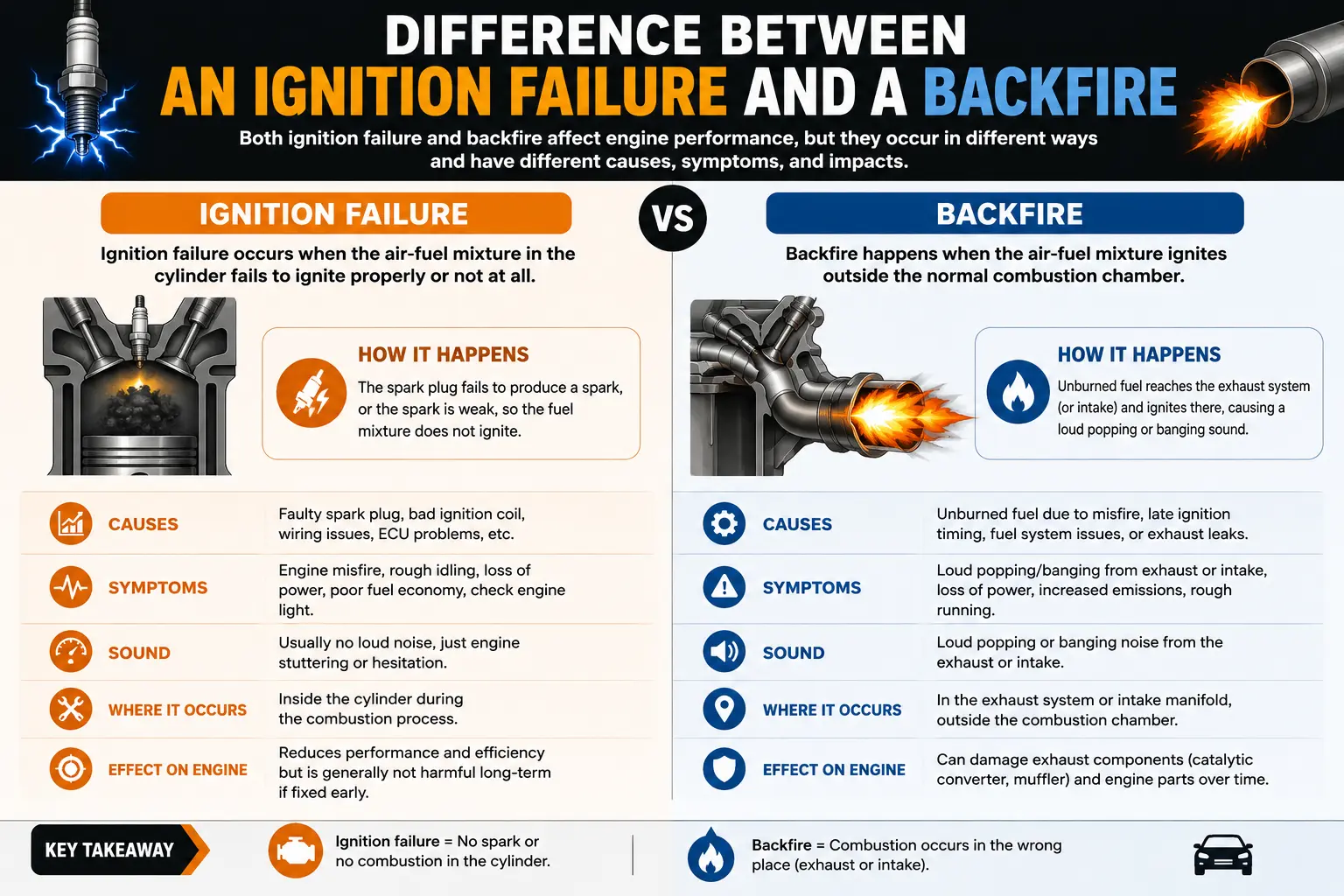
In the automotive world, it’s common to hear terms like misfire and backfire. These two phenomena can be confusing, especially for those unfamiliar with car mechanics. Both problems are related to the ignition system and engine combustion, but they have different causes and consequences. Below, we’ll explore in detail the differences between a misfire and backfire, as well as their causes, symptoms, and how they can be prevented.
What is an ignition failure?
A misfire occurs when a car’s engine fails to start properly. This can happen for various reasons, such as problems with the ignition system, fuel supply issues, or problems with the engine itself. A misfire can cause the engine to run erratically, resulting in a loss of power and increased fuel consumption. It is important to identify and resolve a misfire as soon as possible to prevent further engine damage.
The symptoms of a misfire can vary, but some of the most common include engine vibrations, unusual noises, and difficulty starting the vehicle. The car may also display warning lights on the dashboard, such as the check engine light. If you experience any of these symptoms, it’s advisable to take your vehicle to a mechanic for a proper diagnosis.
Causes of ignition failure
There are several causes that can lead to an ignition failure. Some of the most common include:
- Spark plug problems: Spark plugs are key components in the engine ignition process. If they are dirty or worn, they can prevent the air-fuel mixture from igniting properly.
- Fuel system leaks: If there is a leak in the fuel lines, the engine will not receive the proper amount of fuel, which can cause misfires.
- Ignition coil failure: The ignition coil is responsible for generating the spark needed to ignite the air-fuel mixture. If it fails, the engine will not start.
In addition, the crankshaft position sensor and the airflow sensor can also affect engine performance. If these sensors are faulty, they can send incorrect signals to the engine control unit, resulting in misfires. Therefore, regular vehicle maintenance is crucial to prevent these problems.
What is a backfire?
A backfire, also known as a misfire, is a phenomenon that occurs when the air-fuel mixture ignites in the wrong place within the engine. This can happen in the intake manifold or the exhaust system. Backfires are generally more dangerous than misfires, as they can cause significant damage to the exhaust system and other engine components.
Backfires typically produce a loud, explosive sound, similar to an explosion, and may be accompanied by visible flames coming from the exhaust or engine. This type of problem not only affects vehicle performance but can also indicate more serious issues with the fuel or ignition system. If you experience a backfire, it’s vital to address it immediately to prevent further damage.
Causes of the backfire
The causes of a backfire can be varied, and are often related to a malfunction in the ignition or fuel system. Some of the most common causes include:
- Incorrect air-fuel mixture: If the mixture is too rich (too much fuel) or too lean (too much air), it can cause a backfire.
- Ignition system problems: A malfunction of the spark plugs or ignition coil can cause the spark to occur at the wrong time.
- Exhaust leaks: If there is a leak in the exhaust system, exhaust gases can enter the intake system, causing a backfire.
In addition, using poor-quality fuel or having a faulty fuel injection system can also contribute to backfires. Using the correct fuel and maintaining the fuel injection system in good working order are essential to prevent these problems. Prevention is key, and regular vehicle maintenance can help identify and address these issues before they become dangerous.
Key differences between ignition failure and backfire
Although a misfire and a backfire may seem similar, there are key differences between them. The main difference lies in where the problem occurs. A misfire happens within the engine cylinders, while a backfire occurs in the intake manifold or exhaust system. This means that misfires are generally less dangerous than backfires, which can cause significant damage.
Another important difference is how they manifest. A misfire often presents as a loss of power or difficulty starting the vehicle, while a backfire manifests with popping noises and, sometimes, flames. These differences in symptoms can help vehicle owners identify the problem and find the appropriate solution.
How to diagnose the problem
Diagnosing whether a vehicle is experiencing a misfire or backfire can be complicated, but there are some tests that can be performed. For a misfire, it’s advisable to first check the spark plugs and ignition coil. If these are in good condition, the fuel system should be checked for leaks. A diagnostic scanner can also be helpful in identifying problems with the engine sensors.
In the case of a backfire, it’s crucial to inspect the exhaust system for leaks and check the air-fuel mixture. If the vehicle is equipped with a fuel injection system, it’s also important to verify its operation. In both cases, a qualified mechanic can provide a more accurate diagnosis and suggest the necessary repairs.
Prevention and maintenance
Prevention is key to avoiding both misfires and backfires. Regular vehicle maintenance is essential to keep the ignition and fuel systems in good working order. This includes changing spark plugs and fuel filters according to the manufacturer’s recommendations, as well as performing regular exhaust system checks.
Additionally, it’s important to use quality fuel and ensure the fuel injection system is clean and in good working order. A good habit is to pay attention to symptoms that may indicate a problem, such as unusual noises or changes in engine performance. If you notice anything unusual, it’s best to take the vehicle to a mechanic immediately to prevent bigger problems down the road.
Tips for vehicle owners
For vehicle owners, here are some helpful tips to avoid misfires and backfires:
- Perform regular maintenance: Follow the manufacturer’s recommended maintenance schedule to ensure all components are in good working order.
- Pay attention to the symptoms: If you notice vibrations, strange noises, or starting problems, don’t ignore them and seek professional help.
- Use quality fuel: Make sure to fill the tank with good quality fuel to avoid problems in the fuel system.
By following these tips, you can extend the life of your vehicle and minimize the risk of misfires or backfires. Proper care and maintenance are essential to keeping your car in top condition and ensuring your safety on the road.
Conclusions on ignition failure and backfire
In summary, while a misfire and a backfire may seem similar, they are distinct phenomena with different causes and consequences. A misfire occurs within the engine cylinders and is generally less dangerous, whereas a backfire occurs in the exhaust system and can cause significant damage. With proper maintenance and careful attention to symptoms, vehicle owners can prevent these problems and ensure optimal performance from their car.
