

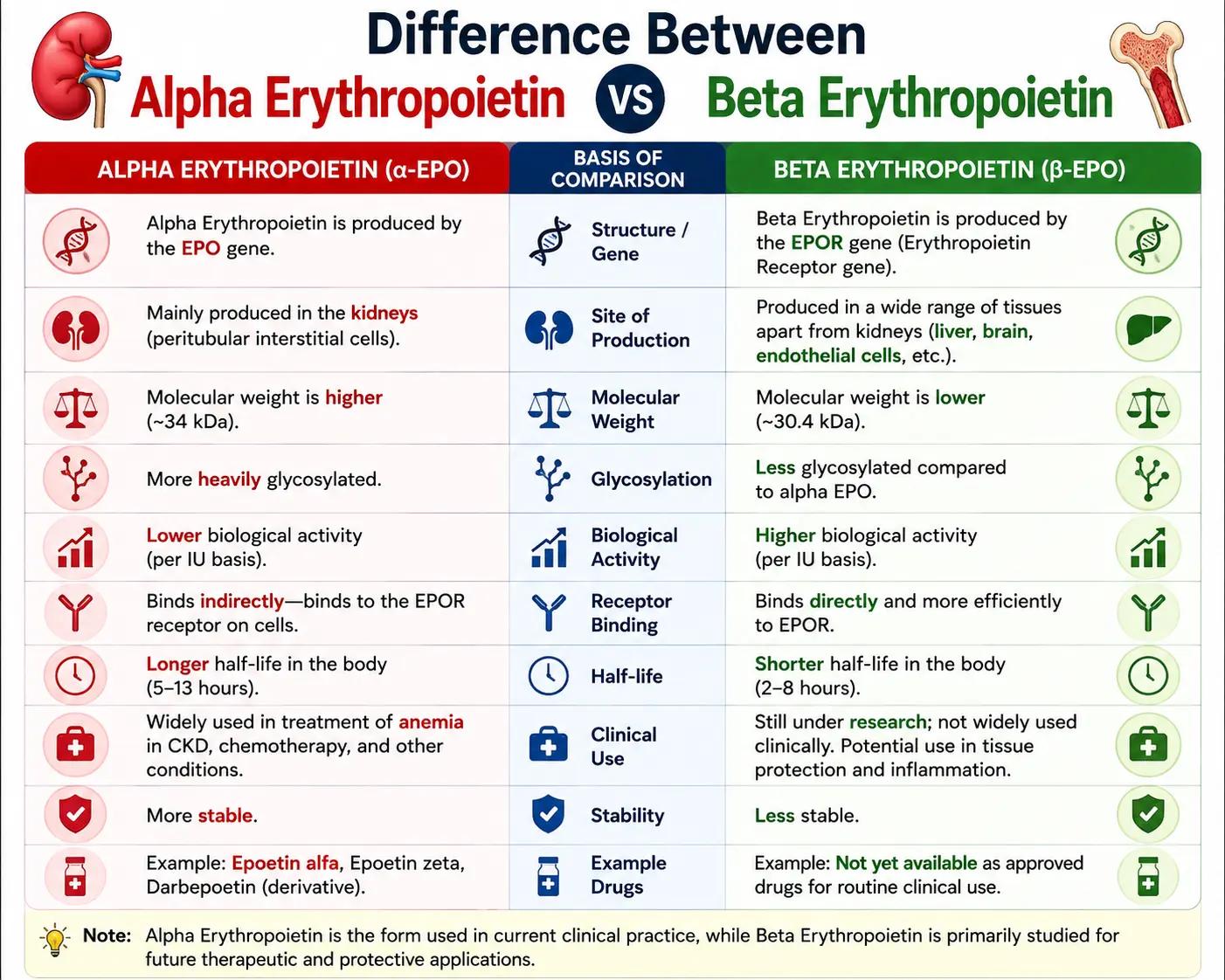
Erythropoietin is an essential hormone for red blood cell production in the human body. This hormone is primarily produced in the kidneys and plays a crucial role in regulating hematopoiesis , the process by which blood cells are generated. There are different forms of erythropoietin, the most well-known being alpha erythropoietin and beta erythropoietin . Although both serve the same purpose in the body, there are key differences between them that are important for their clinical use and production. These differences will be explored in detail below.
Erythropoietin Alpha
Erythropoietin alfa is a recombinant form of erythropoietin commonly used to treat anemia associated with chronic diseases, such as kidney failure. It is produced using biotechnology techniques that allow the protein to be synthesized in mammalian cells. This process ensures that erythropoietin alfa has a structure similar to that of natural erythropoietin, maximizing its effectiveness and minimizing side effects. Erythropoietin alfa is frequently used in patients requiring hemodialysis or who have cancer and are receiving chemotherapy.
One of the main advantages of erythropoietin alfa is its availability . This form of the hormone has been on the market for many years, allowing for the accumulation of a wealth of data on its safety and efficacy. Physicians are familiar with its use and can easily adjust it to each patient’s individual needs. Furthermore, erythropoietin alfa can be administered subcutaneously or intravenously, providing flexibility in treatment.
Uses of Erythropoietin Alpha
- Treatment of anemia in patients with renal failure.
- Use in cancer patients who experience anemia due to chemotherapy.
- It helps improve the quality of life in patients with chronic diseases.
However, despite its benefits, erythropoietin alfa also has its drawbacks. One of the main risks associated with its use is the possibility of increased blood pressure, which can lead to cardiovascular complications. In addition, some patients may develop antibodies against erythropoietin, which can reduce its effectiveness. Therefore, it is essential that physicians closely monitor patients receiving this treatment.
Erythropoietin Beta
Beta erythropoietin is another recombinant form of erythropoietin, but it is produced using a different system. It is often obtained from cell cultures in a way that can result in differences in protein glycosylation, which can affect its biological activity. Although beta erythropoietin is also used to treat anemia in patients with chronic diseases, its use is less common compared to alpha erythropoietin. This is partly because beta erythropoietin is newer to the market and has not been as extensively studied.
An interesting aspect of erythropoietin beta is that it may have a different side effect profile than erythropoietin alpha. Some studies suggest it may have a lower risk of inducing hypertension, which could make it a safer option for certain patients. However, the lack of extensive data on its long-term use raises questions about its efficacy and safety compared to erythropoietin alpha.
Uses of Beta Erythropoietin
- Treatment of anemia in patients with renal failure.
- Use in cancer patients requiring support for red blood cell production.
- Possibly less risk of cardiovascular side effects.
Despite their differences, both erythropoietin alfa and erythropoietin beta share a common goal: to increase red blood cell production and improve the quality of life for patients with anemia. The choice between the two depends on several factors, including the patient’s specific condition, medical history, and response to previous treatment. Therefore, it is crucial that physicians carefully evaluate all these variables before deciding which form of erythropoietin is most appropriate for each patient.
Differences in Structure
One of the most significant differences between alpha and beta erythropoietin is their molecular structure . Both hormones have a similar mechanism of action, but their structure can influence their behavior in the body. Alpha erythropoietin has a specific glycosylation that can affect its stability and duration in the circulatory system. On the other hand, beta erythropoietin can exhibit variations in its glycosylation, which could alter its activity profile.
Glycosylation is a process in which sugars are added to a protein, which can influence its functionality . This modification can affect how the protein interacts with its receptor, as well as its half-life in the body. In general, erythropoietin alpha tends to be more stable in the bloodstream, which could make it more effective for some patients. However, erythropoietin beta, due to its different structure, may offer advantages in terms of a lower risk of side effects.
Comparison of Structures
- Alpha erythropoietin has a more stable glycosylation.
- Beta erythropoietin may exhibit variations in glycosylation.
- Both hormones have a similar mechanism of action but may differ in efficacy and safety.
In addition to structural differences, it is also important to consider how these variations may influence patient response . Some patients may respond better to one form of erythropoietin than another, underscoring the importance of personalized treatment. Ongoing research in this area is crucial for a better understanding of these differences and for optimizing anemia treatments.
Differences in Effectiveness
The effectiveness of erythropoietin alpha and beta can vary depending on several factors, including the patient’s underlying medical condition and their individual response to treatment. In general, erythropoietin alpha has been more extensively studied and used in clinical practice, leading to a deeper understanding of its efficacy. However, this does not mean that erythropoietin beta is less effective; it may simply not have been as widely researched.
Clinical studies have demonstrated that erythropoietin alpha is effective in increasing hemoglobin levels and improving the quality of life of patients with anemia. Erythropoietin beta has also shown positive results, although the available data are more limited. Some trials suggest that erythropoietin beta may be as effective as erythropoietin alpha in certain patient populations, but further research is needed to confirm these findings.
Factors Affecting Effectiveness
- The patient’s underlying medical condition.
- The individual response to treatment.
- The duration and method of administration of the hormone.
The response to erythropoietin treatment can vary among patients due to factors such as age , sex , and the presence of other health conditions. Therefore, it is essential that physicians continuously monitor hemoglobin levels and adjust treatment accordingly. Personalized treatment is key to ensuring that patients derive maximum benefit from erythropoietin therapy, whether alpha or beta.
Side Effects and Safety Considerations
Like any medical treatment, the use of erythropoietin alpha and beta can be associated with a number of side effects . Erythropoietin alpha, for example, has been linked to an increase in blood pressure, which can be a significant problem for some patients, especially those with a history of cardiovascular disease. There may also be a risk of developing antibodies against erythropoietin, which can lead to resistance to the treatment and the need to adjust the therapy.
On the other hand, beta-erythropoietin may have a different side effect profile, although more research is needed to determine its long-term safety. Some studies suggest it may have a lower risk of hypertension, which could make it a safer option for certain patients. However, it is crucial that physicians carefully weigh the risks and benefits of each form of erythropoietin before making a treatment decision.
Safety Considerations
- Blood pressure monitoring during treatment.
- Evaluation of the patient’s response to therapy.
- Consideration of the patient’s medical history before starting treatment.
The safety of erythropoietin can also be affected by other medications a patient is taking. It is essential that physicians review all medications and treatments a patient is using to avoid adverse interactions. Furthermore, educating the patient about potential side effects and the importance of following the physician’s instructions can help improve treatment safety.
Costs and Accessibility
The cost of erythropoietin alpha and beta can be an important factor to consider when treating anemia. Erythropoietin alpha has been available for a longer period and, as a result, may be more affordable. However, the cost can vary depending on the country, brand, and dosage form. On the other hand, erythropoietin beta, being newer to the market, may be more expensive, which could limit its availability for some patients.
Access to these treatments can also be affected by factors such as insurance coverage and public health policies. In some places, erythropoietin alfa may be covered by health insurance, while erythropoietin beta may not. This can lead to inequalities in access to treatment and, ultimately, to the healthcare patients receive.
Factors that Affect Cost
- Type of erythropoietin used.
- Public health policies and insurance coverage.
- Availability of more economical alternatives.
It is crucial that patients and physicians work together to find the most appropriate treatment option, not only from a medical but also a financial perspective. Discussions about costs and accessibility must be part of the conversation about anemia treatment, ensuring that all patients have access to the care they need.
Future Research
Research on alpha and beta erythropoietin continues to evolve, and studies are underway to better understand the differences between these two forms of the hormone. New formulations and delivery methods are being explored that could improve the efficacy and safety of both treatments. Furthermore, research is also focused on identifying biomarkers that can help predict a patient’s response to each type of erythropoietin, which could lead to even greater personalization of treatment.
The search for more effective and safer treatments for anemia is an active area of research. Advances in biotechnology and personalized medicine may offer new opportunities to improve patient care. As more data on alpha and beta erythropoietin accumulate, it will be possible to refine treatment strategies and optimize outcomes for patients.
Areas of Ongoing Research
- Development of new erythropoietin formulations.
- Identification of biomarkers to personalize treatment.
- Studies on the long-term efficacy of both forms of erythropoietin.
Collaboration between researchers, physicians, and patients is essential to advancing this field. As new knowledge is gained, it will be possible to improve the quality of life for patients with anemia and ensure they receive the most appropriate treatment for their individual needs.
