

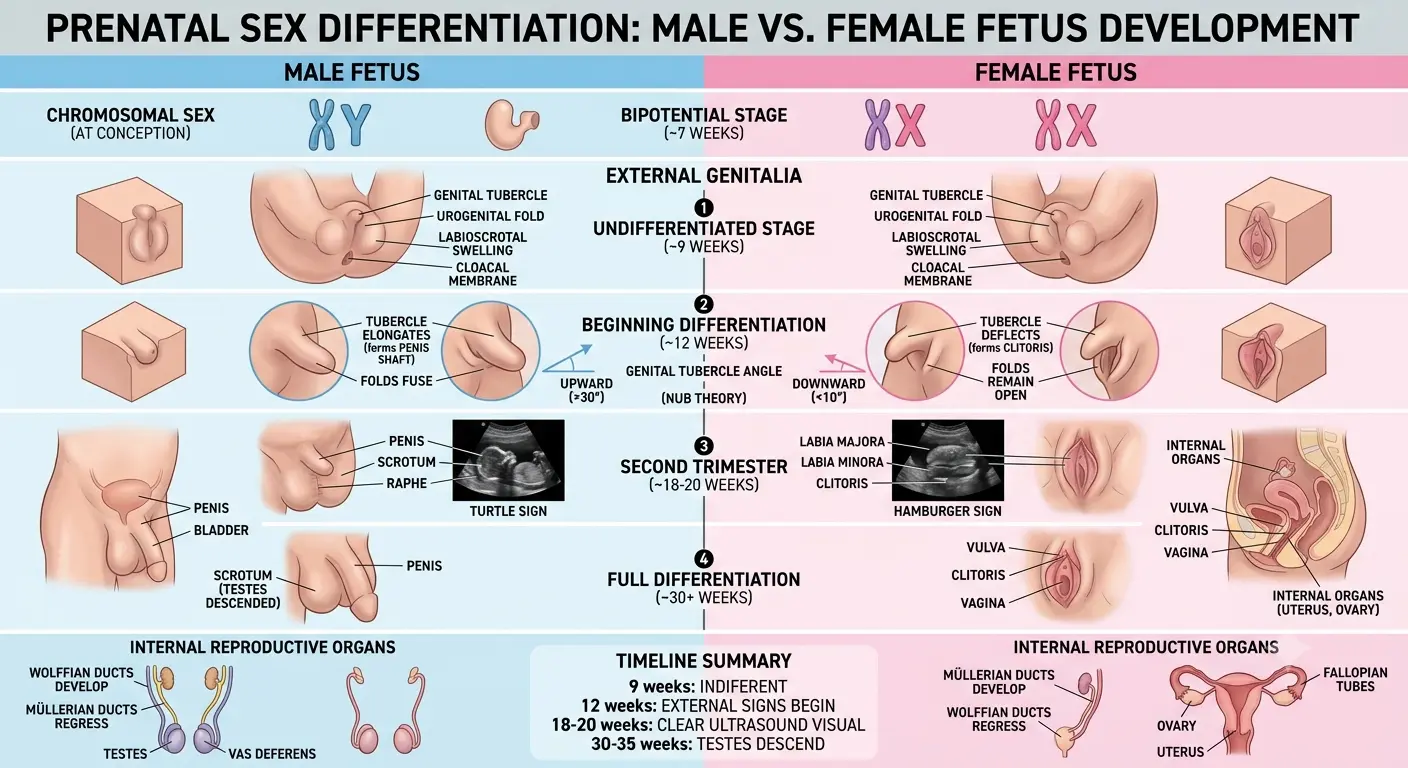
The difference between a male and a female fetus is a fascinating topic encompassing biological, genetic, and hormonal aspects. During prenatal development, a fetus’s sex is determined at conception. However, the physical and hormonal differences that characterize male and female fetuses begin to develop in the first weeks of gestation. In this article, we will explore the various stages of this process, as well as the characteristics that differentiate the two sexes in the womb.
Sex determination in pregnancy
The sex of a fetus is determined at the moment of fertilization. When a sperm carrying an X chromosome unites with an egg, a female fetus (XX) is formed. Conversely, if the sperm carries a Y chromosome, a male fetus (XY) will be formed. This simple genetic process establishes the basis for the differences that will develop later. From this combination of chromosomes, different genes are activated that will guide the sexual development of the fetus.
Once sex has been determined, the development of the sex organs begins. By week 6 of gestation, the chromosomes begin to influence the formation of the gonads. In male fetuses, the SRY gene, located on the Y chromosome, triggers the formation of the testes. In female fetuses, the absence of this gene leads to the development of the ovaries. This process is crucial for the subsequent production of sex hormones that will influence the fetus’s physical development.
Differences in physical development
As pregnancy progresses, the physical differences between male and female fetuses become more apparent. During the first trimester, the two sexes are virtually indistinguishable. However, from week 12 onward, noticeable differences begin to appear. For example, the testicles of male fetuses begin to produce testosterone, a key hormone that influences the development of secondary sexual characteristics.
In male fetuses, testosterone triggers the development of structures such as the penis and scrotum. Conversely, in female fetuses, the lack of testosterone allows structures such as the vulva and vagina to develop. This process is fundamental and marks the difference between the reproductive organs of both sexes. Furthermore, hormones also affect the development of the brain and other organs, which can influence the individual’s future behavior and characteristics.
Hormonal characteristics
Hormones play a crucial role in the differentiation between male and female fetuses. As mentioned earlier, testosterone is fundamental for male development. However, it is not the only hormone involved. Female fetuses also produce hormones, but in different amounts. For example, the ovaries of a female fetus will begin to produce estrogen and progesterone as the pregnancy progresses, which also affects her development.
Hormonal differences not only influence physical development but can also impact behavior. Some studies suggest that testosterone levels in the womb can influence an individual’s predisposition to certain behaviors, such as aggression or sociability. However, it is important to note that these effects are not absolute and can vary considerably between individuals.
Genetic and epigenetic aspects
Genetics is the basis for the differences between male and female fetuses, but epigenetics also plays a significant role. Epigenetics refers to changes in gene expression that do not involve alterations in the DNA sequence. These changes can be influenced by environmental factors, such as the mother’s diet, stress, and other factors during pregnancy.
For example, some studies have shown that exposure to certain pollutants or stress during pregnancy can affect how genes related to sexual development are expressed. This means that even if a fetus has a genetic predisposition to be male or female, external factors can influence how it develops. This adds a layer of complexity to understanding the differences between the sexes.
Differences in growth and development
During pregnancy, male and female fetuses can experience different growth rates. In general, male fetuses tend to be larger and have a higher birth weight compared to female fetuses. This difference may be related to the effects of testosterone on cell growth and organ development. However, it is important to note that these are averages and that there is significant variability among individuals.
Fetal growth can also be affected by factors such as the mother’s nutrition and overall health. A mother who receives adequate nutrition and has a healthy lifestyle is more likely to have a fetus that grows optimally, regardless of its sex. Therefore, although there are biological differences, the environment also plays a crucial role in fetal development.
Health Implications
The differences between male and female fetuses may also have implications for health throughout life. Some studies suggest that males are more likely to develop certain health conditions, such as cardiovascular disease and autism spectrum disorders. On the other hand, females tend to have a greater predisposition to autoimmune disorders. These differences may be related to biology and hormones, as well as environmental factors.
Furthermore, mental health can be affected by prenatal development. Exposure to different levels of sex hormones can influence a predisposition to mental disorders in adulthood. For example, it has been suggested that exposure to high levels of testosterone in utero may be linked to increased aggression or risky behaviors in adolescence and adulthood.
Brain development and behavioral differences
Fetal brain development also shows significant differences between the sexes. Testosterone impacts the formation of certain brain areas related to behavior and cognitive abilities. For example, some studies have found that male fetal brains tend to develop areas associated with spatial and motor skills, while female fetal brains may develop areas related to communication and empathy.
These differences can influence individuals’ behavior as they grow. While environment and education play a significant role, biological differences can lay the groundwork for certain predispositions. However, it is crucial to remember that every individual is unique and that generalizations do not always apply. Life experiences, upbringing, and other factors can influence a person’s behavior and abilities.
External factors that influence fetal development
In addition to biological and hormonal differences, external factors can influence the development of male and female fetuses. The mother’s health, diet, stress, and exposure to toxins are some of the factors that can have a significant impact. For example, mothers who consume a nutrient-rich diet are more likely to have healthy fetuses, regardless of their sex.
Maternal stress can also affect fetal development. Studies have shown that chronic stress during pregnancy can have negative effects on fetal growth and development. This is because stress can alter hormone levels and affect blood flow to the fetus. Therefore, it is important for mothers to take care of their mental and emotional health during pregnancy to ensure optimal development.
Studies and advances in research
Research into the differences between male and female fetuses has advanced significantly in recent decades. Scientists have used imaging technologies and genetic studies to better understand how fetuses develop and how hormones and the environment influence their growth. These studies have identified genetic and epigenetic markers that can help predict fetal development and health.
Furthermore, research has been conducted to better understand how differences in fetal development can influence long-term health. For example, some studies have explored the relationship between prenatal hormone exposure and the risk of developing mental health disorders or chronic diseases in adulthood. This area of research remains active and may provide valuable insights for improving maternal and fetal health in the future.
Conclusions on fetal differences
The differences between male and female fetuses result from a complex interplay of genetic, hormonal, and environmental factors. From sex determination at fertilization to differences in growth and development, each aspect contributes to the uniqueness of each individual. As research progresses, it is hoped that these differences, and how they may influence health and behavior throughout life, will be better understood.
Ultimately, it is essential to remember that, although there are biological differences between the sexes, each person is unique. Life experiences, environment, and education play a crucial role in an individual’s development. Understanding the differences between male and female fetuses not only enriches our scientific knowledge but also helps us appreciate the diversity of human experience.
