

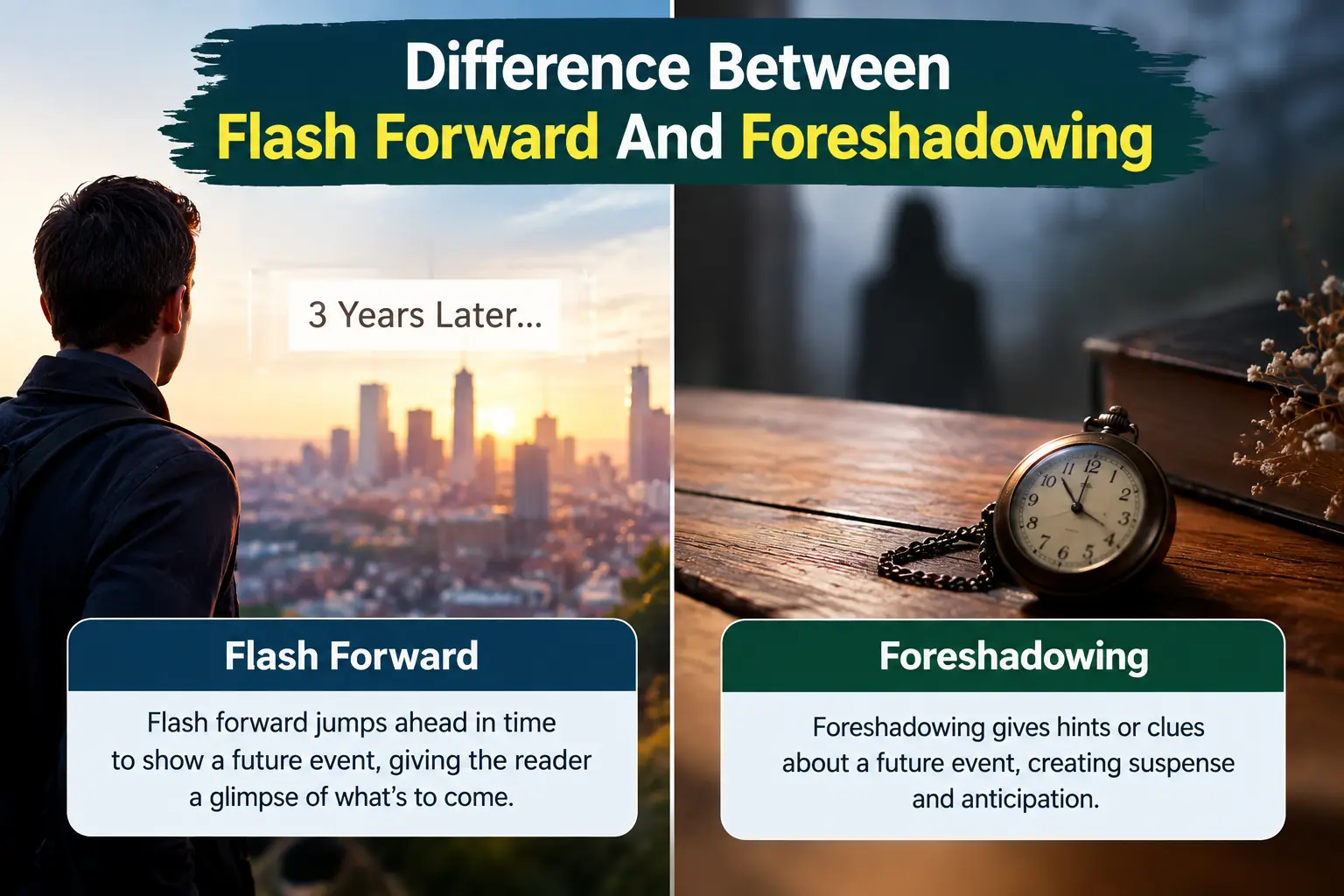
In narrative, the use of literary techniques is fundamental to maintaining reader interest and developing the plot effectively. Two such techniques are flashforward and foreshadowing. Although they may seem similar at first glance, they serve different functions within a story. Flashforward allows readers to see future events, while foreshadowing suggests or hints at events that will occur later. Both techniques are powerful tools that writers use to create tension and anticipation. Below, we will explore these two literary techniques in detail, their differences, and examples of their use.
What is Flash Forward?
The flash- forward is a narrative technique that allows the author to show an event that will occur in the future of the story. This device is often used to create suspense or to reveal important information that can change the reader’s perception of the plot. For example, an author might present a scene that takes place years after the main events of the story, allowing the reader to see the consequences of the characters’ decisions. This technique not only helps build tension but can also provide a new perspective on the story being told.
A flash-forward can be brief or extensive, depending on the author’s intention. Sometimes it’s used to show a small glimpse into the distant future, while other times it can occupy an entire chapter. This technique is especially effective in genres like science fiction or thrillers, where the implications of characters’ actions can have significant consequences. Furthermore, the use of flash-forwards can heighten reader interest by leaving questions unanswered that will only be resolved later in the narrative.
Examples of Flash Forward
- Example in movies: In the movie “Lost”, there are several moments in which scenes of the characters’ future are shown, creating a sense of mystery and anticipation.
- Example in literature: In the book “The Time Traveler’s Wife”, time jumps are used that allow readers to see how past events affect the future of the characters.
What is Foreshadowing?
Foreshadowing is a technique used to hint at what will happen later in a story. Through this technique, authors can subtly suggest future events, creating a sense of anticipation without revealing too much. Foreshadowing can manifest in various ways, such as through dialogue, descriptions, or even character behavior. This technique helps build tension and reader interest, while also allowing them to make connections between present and future events.
One of the most interesting features of foreshadowing is that it can be used to establish the tone of a story. For example, if an author wants the reader to feel that something bad is about to happen, they can include elements that suggest danger or uncertainty. This not only increases tension but also allows readers to become more involved in the plot as they try to predict what will happen next. In this sense, foreshadowing is a tool that helps maintain the reader’s interest throughout the narrative.
Examples of Foreshadowing
- Example in literature: In William Shakespeare’s “Romeo and Juliet”, there are several foreshadowings that suggest the tragic end of the story, such as the famous line “I am a lucky man”.
- Example in film: In “The Sixth Sense”, there are subtle moments that indicate the true nature of the main character, leading to a shocking revelation at the end of the film.
Key Differences Between Flash Forward and Foreshadowing
The main difference between flashforward and foreshadowing lies in their function within the narrative. While flashforward offers a direct glimpse into future events, foreshadowing provides clues and hints about what might happen. This distinction is crucial for understanding how each technique affects the reader’s experience. Flashforward can reveal information that changes the direction of the story, while foreshadowing creates an atmosphere of anticipation that can culminate in surprises or unexpected twists.
Another important difference is how these techniques are presented in the narrative. A flash-forward is generally more explicit and can be a clear scene change, while foreshadowing is usually more subtle, hidden within the dialogue or the description of the setting. This subtlety allows foreshadowing to be integrated more seamlessly into the story, which can make readers feel more immersed in the plot. At the same time, a flash-forward can create a shock or surprise that keeps the reader on edge and eager to discover how the story got to that point.
Comparison of Effects
- Flash Forward: It can have an immediate impact and change the direction of the narrative.
- Foreshadowing: Builds long-term tension and allows readers to speculate about the future.
How are they used in different genres?
The way flashforwards and foreshadowing are used can vary significantly depending on the literary genre. In science fiction, for example, flashforwards are common, as they allow authors to explore dystopian or utopian futures. This not only provides context for characters’ decisions but can also serve as a warning about the potential consequences of human actions. On the other hand, foreshadowing in this genre can manifest itself through descriptions of technologies or events that suggest impending problems.
In thrillers and mysteries, foreshadowing is an essential tool. Authors often plant clues throughout the story that, when revealed at the end, allow the reader to experience a sense of satisfaction in connecting the dots. Flash-forwards in this context can be used to foreshadow a crime that is about to be committed, increasing urgency and tension as the characters try to prevent it. Combining both techniques can result in a very rich and exciting narrative.
Examples in specific genres
- Science Fiction: In Frank Herbert’s “Dune”, there are elements of Foreshadowing that suggest the fate of the planet Arrakis.
- Thriller: In Gillian Flynn’s “Gone Girl”, the use of foreshadowing is key to understanding the evolution of the plot and the twists in the story.
Impact on the reader’s experience
The effective use of flashforward and foreshadowing can transform the reader’s experience. When used correctly, these techniques can forge a deeper emotional connection with the story and its characters. Foreshadowing allows readers to become involved in the plot, making them feel like detectives searching for clues, while flashforward can evoke awe or anticipation by revealing what’s to come. Both techniques, when combined, can create a narrative rich in nuance and emotion.
Furthermore, the use of these techniques can influence how readers interpret the story. A flash-forward can change how characters’ actions are perceived by providing previously unclear context. On the other hand, foreshadowing can lead readers to reconsider their assumptions about current events, creating a sense of depth and complexity in the narrative. In this sense, the impact of these techniques extends beyond the plot, affecting how readers connect with the characters and their decisions.
Influence on creative writing
- Flash Forward: Helps writers plan the development of the story and maintain tension.
- Foreshadowing: Allows writers to build a more coherent and richly detailed narrative.
Conclusion of the Comparison
Flashforward and foreshadowing are two narrative techniques that, while distinct, share the goal of enriching the reader’s experience. While flashforward offers a clear glimpse of what is to come, foreshadowing plants clues that draw the reader deeper into the story. Both techniques, when used effectively, can heighten tension and interest, creating a narrative that resonates in the reader’s mind long after they have finished reading. Understanding these techniques is not only useful for writers but also for readers seeking a deeper and more meaningful experience when exploring different literary works.
